Eco Friendly Coffee Subscription Checklist for 2026

A sustainable coffee subscription is defined as a recurring coffee delivery service that verifies certified organic sourcing, uses recyclable or compostable packaging, and maintains transparent supply chain practices from farm to doorstep. This eco friendly coffee subscription checklist covers every criterion you need to evaluate before committing to a plan: USDA Organic certification, Fair Trade and Rainforest Alliance labels, packaging disposal requirements, and delivery flexibility. Brands like Moustachecoffeeclub have built their entire model around these standards, sourcing single-origin beans from Ethiopia and Colombia with reduced plastic packaging. Working through this checklist takes the guesswork out of conscious coffee choices and helps you spend your money where your values actually are.
1. Verify USDA Organic and other core certifications
Certification is the single most reliable signal of an environmentally friendly coffee subscription, and USDA Organic is the gold standard for the U.S. market. The USDA National Organic Program requires any operation with over $5,000 in annual organic sales to complete annual renewal and third-party inspections. That means the certification on the bag is not a one-time marketing decision. It is a continuously audited commitment.
The critical distinction is between certified organic and simply organic in marketing copy. Organic claims without certification lack the documented Organic System Plan that covers farm processes, inputs, and traceability. Any brand using the word “organic” without a certifying body listed on the label deserves skepticism.
Beyond USDA Organic, look for these labels when building your green coffee options checklist:
- Fair Trade Certified (Fair Trade USA or Fairtrade International): guarantees minimum price floors and community premiums for farmers
- Rainforest Alliance: focuses on biodiversity, water use, and ecosystem protection at the farm level
- Smithsonian Bird Friendly: the strictest shade-grown standard, requiring USDA Organic as a prerequisite
- Direct Trade: not a third-party certification, but a sourcing model worth verifying through brand transparency reports
Pro Tip: Search the USDA’s organic integrity database at ams.usda.gov to confirm a brand’s certification status before subscribing. A legitimate certificate number is publicly searchable.
2. Evaluate sourcing transparency and direct trade practices
Transparent sourcing is what separates a genuinely ethical coffee brand from one that uses sustainability as a marketing angle. Direct trade and long-term sourcing relationships deliver better environmental stewardship than spot-market bulk buying because the roaster has a financial stake in the farm’s long-term health. When a roaster returns to the same cooperative in Yirgacheffe or the same estate in Huila year after year, both parties have incentive to maintain soil quality, water access, and fair labor conditions.

Single-origin coffees are the clearest expression of this principle. When a bag names a specific farm, region, or cooperative, you can trace the coffee’s journey. Blends are not inherently unsustainable, but traceable blends with named origins hold brands accountable in a way that anonymous blends do not. Moustachecoffeeclub publishes origin reports for each coffee it sources, which is exactly the kind of ethical sourcing transparency that should appear on your checklist.
When evaluating any subscription, ask these sourcing questions:
- Does the brand name the specific farm, cooperative, or region?
- Is the harvest year or crop season disclosed?
- Does the brand describe its relationship with the producer, including how long it has worked with them?
- Are environmental farm practices mentioned, such as shade-grown methods, water recycling, or organic inputs?
Sustainable coffee buying requires verifying these sourcing details alongside certifications. A brand that scores well on both is worth your subscription dollars.
3. Assess eco-friendly packaging and disposal requirements
Packaging is where many otherwise sustainable subscriptions fall short, and the details matter more than most consumers realize. The first distinction to understand is between industrial compostable and home compostable certifications. Industrial compostable bags require high-temperature commercial composting facilities to break down properly. If your city does not offer industrial composting pickup, that bag will likely end up in a landfill regardless of its certification.
Home compostable certification is less common but more practical for most households. It means the material breaks down in a backyard compost pile within a defined timeframe. Always check which standard applies before assuming a “compostable” bag is actually low-impact in your specific location.
A second critical rule: compostable bags must never go into standard plastic recycling bins. They contaminate recycling streams and damage circular waste processing systems. This is one of the most common disposal mistakes eco-conscious consumers make.
Pro Tip: Check your city’s waste management website before subscribing to confirm whether industrial composting pickup is available. If it is not, prioritize subscriptions using mono-material recyclable films like LDPE over compostable bags.
Here is a quick reference for packaging types and their disposal requirements:
| Packaging type | Disposal method | Availability |
|---|---|---|
| Industrial compostable | Commercial composting facility | Limited by city infrastructure |
| Home compostable | Backyard compost bin | Widely available |
| Mono-material LDPE film | Curbside recycling (check locally) | Broadly available |
| Multilayer laminate | Landfill in most cases | Not recommended |
| Kraft paper with liner | Depends on liner material | Verify with brand |
The EU Packaging and Packaging Waste Regulation requires that packaging be fully recyclable by 2030, with digital environmental labeling like QR codes required from 2027. Many forward-thinking roasters are already transitioning to mono-material recyclable films to meet these deadlines. Even if you are not in the EU, this regulatory shift signals where the industry is heading and which brands are investing in genuine packaging reform.
4. Check subscription flexibility to reduce waste
Delivery frequency is a sustainability variable most coffee subscription guides ignore. Receiving more coffee than you can drink before it goes stale is waste, plain and simple. Adjustable delivery schedules and pausing options help you align consumption with actual need, which reduces both coffee spoilage and unnecessary shipping emissions.
Look for these flexibility features in any organic coffee delivery service you consider:
- Adjustable frequency: weekly, biweekly, or monthly options with the ability to change between deliveries
- Pause or skip: the ability to delay a shipment when traveling or overstocked without canceling entirely
- Grind customization: whole bean versus various grind sizes to match your brewing method and reduce waste from incompatible grinds
- Quantity options: 250g versus 500g versus 1kg options so you order only what you will use
Flexible subscriptions with grind options and scheduling changes consistently produce higher customer satisfaction and lower waste rates. A subscription that locks you into a fixed cadence is not just inconvenient. It actively works against your sustainability goals by generating excess product and packaging.
Shipping distance also matters. A roaster based in your region ships shorter distances, which reduces the carbon footprint per delivery compared to international shipping. This is worth factoring into your coffee delivery checklist alongside certifications and packaging.
5. Compare top eco-friendly subscription features side by side
Not all best eco coffee subscriptions offer the same combination of credentials. The table below summarizes the key sustainability features to compare when evaluating your options.
| Feature | What to look for | Why it matters |
|---|---|---|
| Organic certification | USDA Organic seal with certifying body named | Confirms regulated, audited compliance |
| Sourcing model | Single origin with named farm or cooperative | Enables traceability and accountability |
| Packaging type | Home compostable or mono-material recyclable | Matches real-world disposal infrastructure |
| Delivery flexibility | Pause, skip, and frequency adjustment options | Reduces waste and excess shipments |
| Transparency | Origin reports, harvest year, producer relationship | Signals genuine commitment over marketing |
Moustachecoffeeclub checks each of these boxes with its Nordic-style single-origin model. Its subscription plan tiers offer customizable frequency and quantity options, and every coffee ships with detailed origin information. That combination of certification, sourcing transparency, and delivery flexibility is the benchmark to measure other subscriptions against.
Key takeaways
A genuinely eco-conscious coffee subscription requires verified certification, traceable sourcing, packaging matched to your local disposal infrastructure, and delivery flexibility that prevents waste.
| Point | Details |
|---|---|
| Certification must be verified | USDA Organic requires annual audits; reject “organic” claims without a named certifying body. |
| Sourcing transparency is non-negotiable | Single-origin coffees with named farms and direct trade relationships confirm real accountability. |
| Packaging type must match local infrastructure | Industrial compostable bags are only low-impact if your city offers commercial composting pickup. |
| Delivery flexibility reduces waste | Pause and skip options prevent overbuying and cut unnecessary shipping emissions. |
| Compare features before subscribing | Use a side-by-side checklist covering certification, sourcing, packaging, and flexibility before committing. |
Why the checklist matters more than the marketing
I have spent years reading coffee brand websites that describe themselves as “sustainable,” “ethical,” and “planet-positive” without a single verifiable claim to back it up. The language is everywhere. The substance is not. What changed my approach was treating every subscription decision the way I would treat a financial decision: verify first, trust second.
The packaging issue is the one that surprises most people. I have seen genuinely well-intentioned coffee drinkers toss compostable bags into their blue recycling bins, convinced they were doing the right thing. They were actually contaminating an entire batch of recyclables. The problem is not the consumer. It is that brands rarely explain disposal requirements clearly enough. When a brand does explain it, that transparency alone tells you something meaningful about how they operate.
The sourcing piece is where I find the most variation between brands that look similar on paper. Direct trade is not a certification. It is a relationship. The brands worth supporting are the ones that can tell you the farmer’s name, the elevation of the farm, and how long they have worked together. Moustachecoffeeclub publishes that level of detail for every origin it carries, which is the standard I now expect from any subscription I recommend.
Aligning your subscription with your values is not complicated once you have a clear checklist. The goal is not perfection. It is informed choice.
— Sean
Start your sustainable coffee subscription with Moustachecoffeeclub
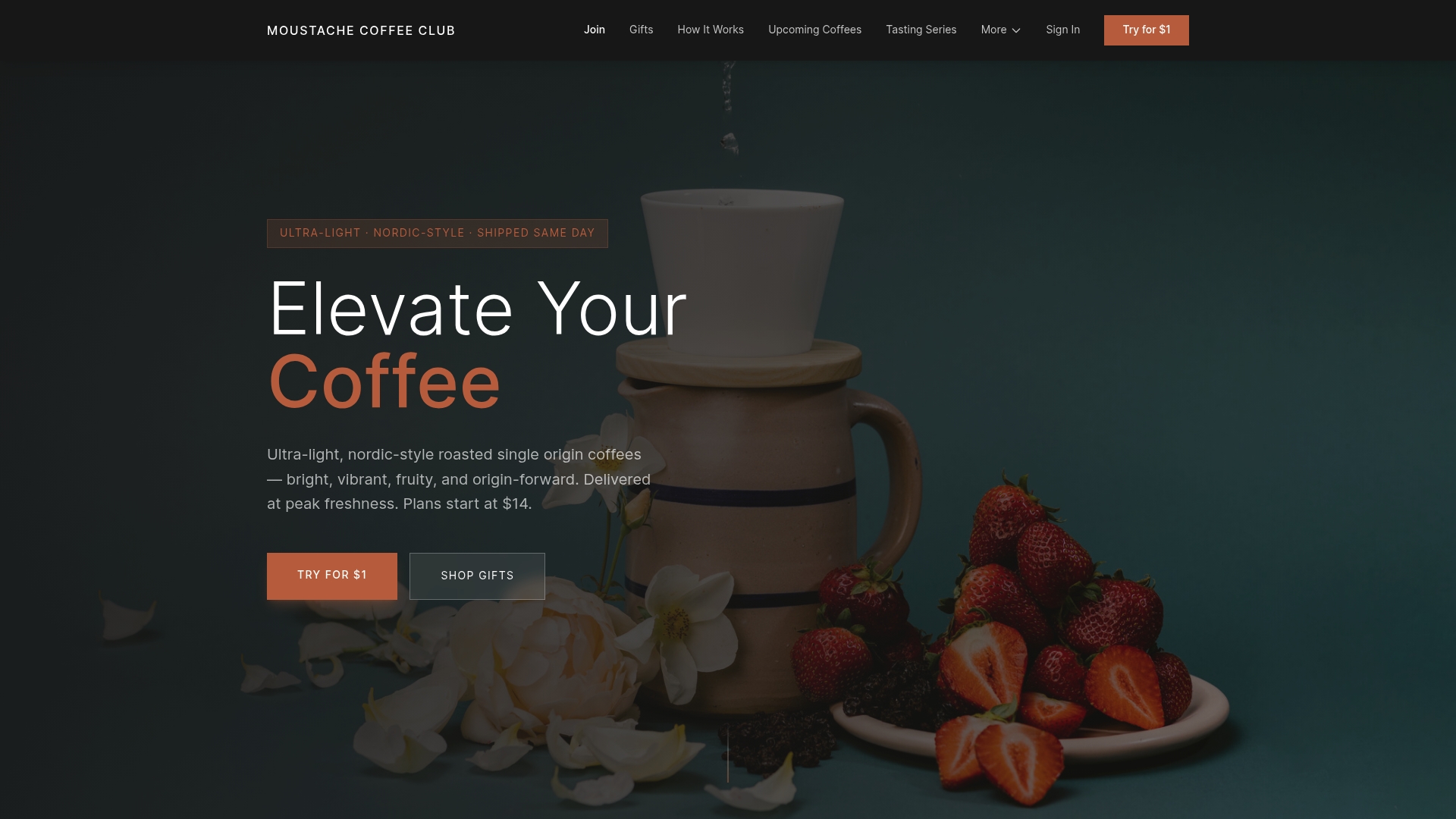
Moustachecoffeeclub sources USDA Organic certified, single-origin specialty coffees from traceable farms in Ethiopia, Colombia, and beyond, roasted to order in the ultra-light Nordic tradition. Every subscription ships with full origin reports, reduced plastic packaging, and the flexibility to adjust frequency, pause, or customize your grind. If you have worked through this checklist and know what you are looking for, Moustachecoffeeclub is built to meet every criterion on it. Start your subscription and receive freshly roasted beans that reflect exactly where they came from and how they were grown.
FAQ
What does an eco friendly coffee subscription checklist include?
An eco friendly coffee subscription checklist covers USDA Organic certification, traceable single-origin sourcing, eco-conscious packaging with clear disposal instructions, and flexible delivery options that reduce waste. Verifying each of these criteria helps you confirm a brand’s sustainability claims are backed by real practices.
Is “organic” coffee the same as USDA Organic certified?
No. “Organic” in marketing copy carries no regulatory weight without a named certifying body and certificate number. USDA Organic certification requires annual third-party inspections and a documented Organic System Plan covering all farm inputs and processes.
Can I put compostable coffee bags in my recycling bin?
No. Compostable bags placed in recycling bins contaminate recycling streams and harm circular waste processing. Industrial compostable bags require a commercial composting facility, while home compostable bags can go into a backyard compost pile.
How does delivery frequency affect sustainability?
Receiving more coffee than you consume before it goes stale creates food waste and generates unnecessary packaging and shipping emissions. Adjustable delivery schedules and pause options let you match shipments to your actual consumption, making the subscription genuinely lower-impact.
What is direct trade and why does it matter for eco-conscious coffee?
Direct trade is a sourcing model where roasters buy directly from specific farms or cooperatives, often with long-term relationships and above-market pricing. Long-term direct trade relationships improve farmer livelihoods and support environmental stewardship in ways that anonymous commodity purchasing cannot.
Recommended
- Why Ethical Coffee Matters as a Gift in 2026 | Blog | The Moustache Coffee Club
- How Coffee Brands Practice Sustainability in 2026 | Blog | The Moustache Coffee Club
- Last-Minute Specialty Coffee Gift Guide for 2026 | Blog | The Moustache Coffee Club
- Best Coffee Subscription | Fresh Roasted Single Origin | Moustache Coffee Club


