How specialty coffee supports farmers: The ethical drinker’s guide
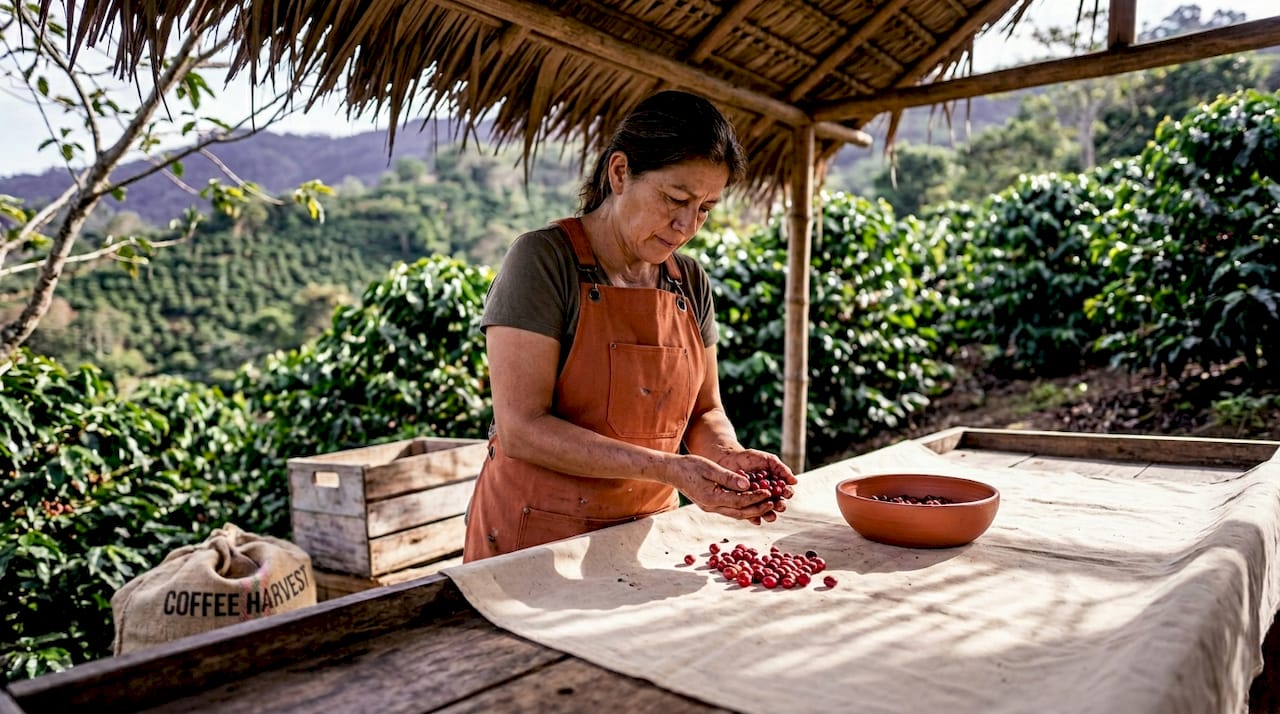
Most coffee drinkers assume the premium they pay for specialty coffee disappears somewhere between the roaster and the retailer. The reality is far more direct. How specialty coffee supports farmers is one of the most concrete stories in ethical consumption: farmers in Southern Ecuador saw their earnings jump from around $200 per bag to up to $1,000 per bag by entering specialty markets. That is not a rounding error. It is a fundamentally different economic life. This article breaks down exactly how that happens, where the system still falls short, and what you can do about it.
Table of Contents
- How specialty coffee raises farmer incomes and improves livelihoods
- Sustainable farming practices encouraged by specialty coffee
- Challenges and nuances in specialty coffee’s support for farmers
- How consumers can support farmers through specialty coffee purchases
- Why treating coffee farmers as business partners is the key to lasting impact
- Discover specialty coffee that supports farmers and sustainability
- Frequently asked questions
Key Takeaways
| Point | Details |
|---|---|
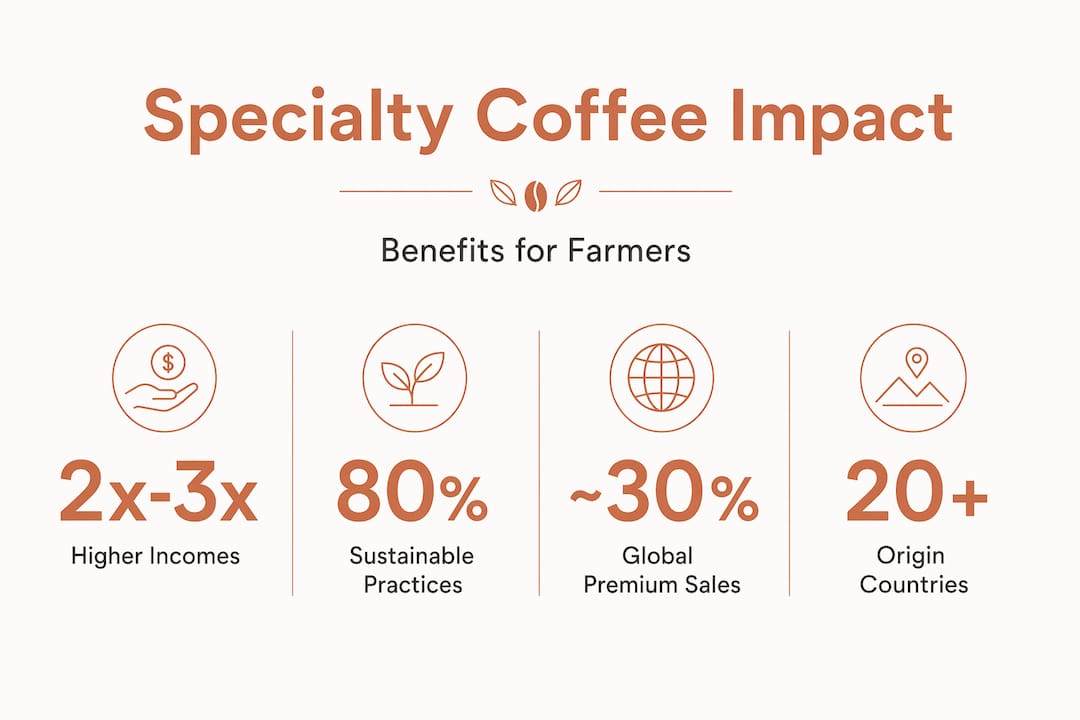
| Specialty coffee raises incomes | Specialty coffee can increase farmer earnings by up to five times compared to commodity markets. |
| Supports sustainable farming | Specialty coffee encourages agroforestry and soil management practices that protect the environment. |
| Equity challenges remain | Premiums often concentrate with a few farms, so supporting cooperatives helps spread benefits. |
| Treat farmers as partners | Fair, consistent pricing and long-term partnerships empower farmers to innovate and thrive. |
| Consumer choices matter | Choosing direct trade and women-led specialty coffee brands maximizes positive impact. |
How specialty coffee raises farmer incomes and improves livelihoods
The commodity coffee market is brutal for smallholder farmers. Prices are set by the New York “C” market, which fluctuates based on global supply and demand with zero regard for what it actually costs a farmer to grow quality coffee. Specialty coffee breaks that link entirely.
When a coffee scores 80 points or above on the Specialty Coffee Association’s 100-point scale, it enters a different pricing conversation. Roasters and importers negotiate directly with farms or cooperatives, and quality becomes the currency. That shift alone changes everything.
Here is what that looks like in practice:
- Premium pricing: Specialty buyers pay well above commodity rates, often two to five times the “C” price, directly to farmers or their cooperatives.
- Collective bargaining power: Farmer cooperatives pool their harvests to negotiate better rates, share processing infrastructure, and meet the volume buyers need.
- Government and NGO backing: In regions like Kenya, institutional support amplifies the effect. Kirinyaga County farmers received record payouts totaling Ksh 7.4 billion in 2026, a result of cooperative structures combined with government investment in quality programs.
- Market resilience: Specialty premiums act as a buffer. When commodity prices crash, as they do regularly, specialty farmers have a floor. 64% of Ugandan Robusta farmers earn a living income, with specialty premiums providing the resilience that commodity prices simply cannot.
Key stat: A “living income” means a farmer can cover food, education, healthcare, and modest savings. For most commodity coffee farmers, that threshold is out of reach. Specialty premiums move it within reach.
The income jump is not automatic, though. Farmers need access to quality training, reliable buyers, and sometimes processing equipment they cannot afford alone. That is why the coffee education side of the specialty world matters as much as the pricing side. When farmers understand what buyers want and why, they can invest in the right places.
Now that we have seen specialty coffee’s income benefits, let’s explore how it encourages sustainable farm practices.
Sustainable farming practices encouraged by specialty coffee
Specialty coffee and environmental sustainability are not just compatible. They are structurally connected. The flavor profiles that earn premium prices are largely a product of healthy, biodiverse growing environments. A farmer who strips their land for short-term yield destroys the very thing buyers are paying for.
This creates a genuine economic incentive for sustainable practices, which is far more durable than charity or regulation.
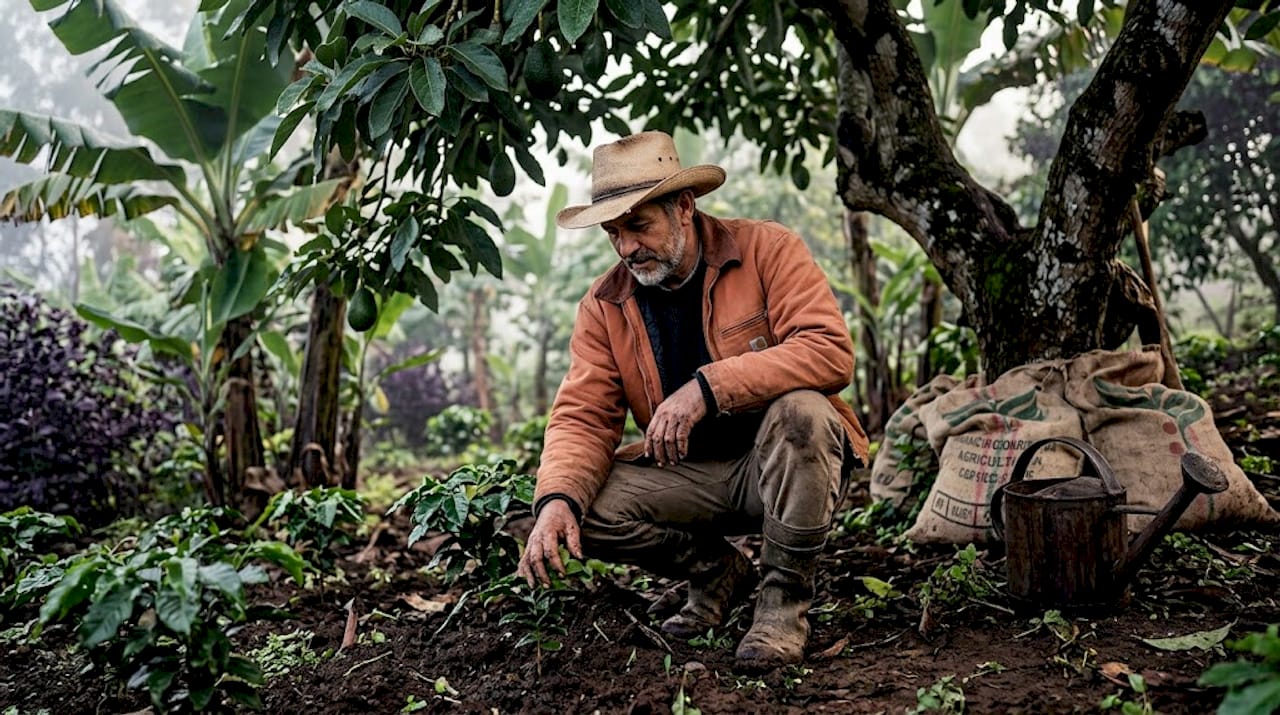
Ecuadorian specialty coffee farmers have adopted agroforestry systems that combine coffee plants with fruit trees, timber species, and native vegetation. The results are measurable: restored soil health, reduced erosion, and crops that hold up better during drought years. The trees also provide shade that slows cherry ripening, which concentrates sugars and improves cup quality. Better flavor, better price, better land. That is the loop specialty coffee creates.
Specific sustainable practices common in specialty coffee farming include:
- Agroforestry: Growing coffee under a canopy of mixed trees improves biodiversity, reduces the need for chemical inputs, and creates additional income streams from fruit and timber.
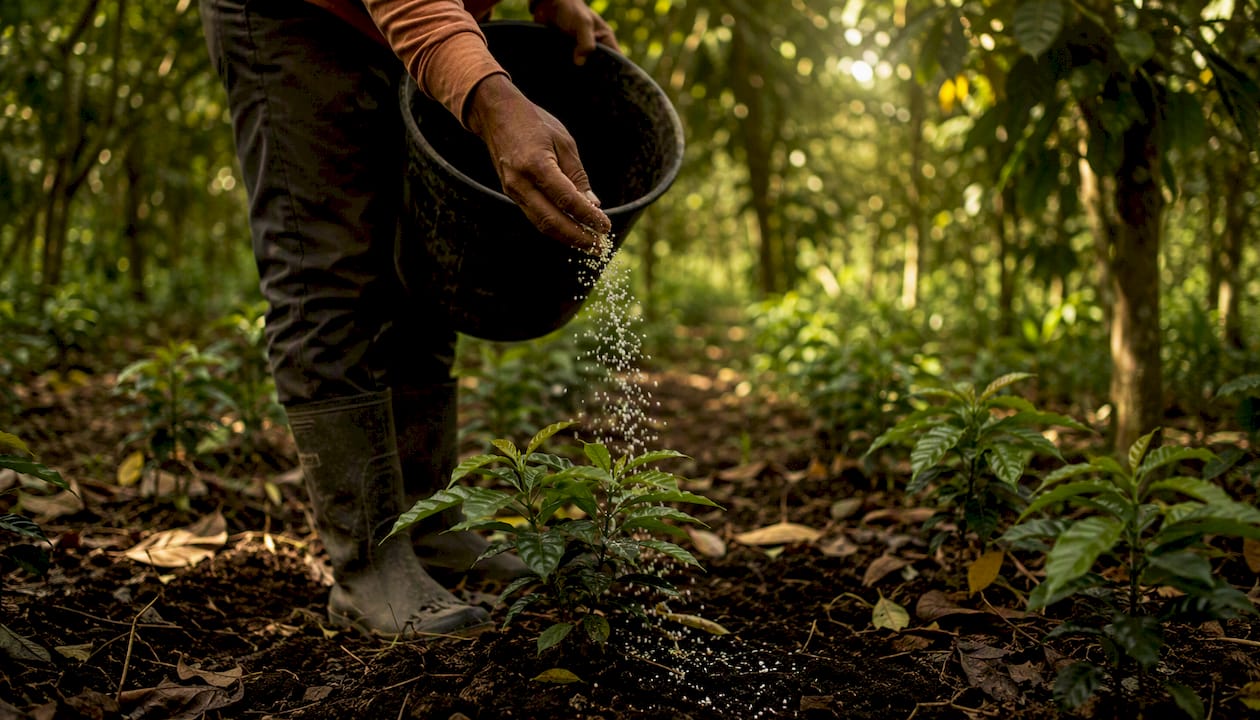
- Soil management: Composting coffee pulp (the fruit removed during processing) returns nutrients to the soil, reducing fertilizer costs and improving long-term yield.
- Water conservation: Wet processing, common in specialty coffee, has evolved to use far less water through eco-pulping technology, reducing the environmental footprint of each batch.
- Biodiversity protection: Shade-grown specialty farms serve as habitat corridors for birds and insects, including the pollinators that keep farms productive.
Pro Tip: When you read an origin report for a specialty coffee, look for mentions of shade-grown or agroforestry practices. These are not just marketing terms. They signal that the farmer is managing their land for the long term, which usually means the coffee itself is more complex and interesting in the cup.
Sustainable coffee farming is not a sacrifice for specialty producers. It is a competitive advantage. The farms producing the most sought-after lots in Ethiopia, Colombia, and Kenya are almost universally the ones with the most thoughtful land management.
With economic and environmental advantages established, we can examine the challenges and nuances specialty coffee faces in supporting all farmers fairly.
Challenges and nuances in specialty coffee’s support for farmers
Specialty coffee does enormous good. It also has a blind spot that the industry is only beginning to confront honestly.
The moral narrative around specialty coffee often centers on struggling farmers in difficult conditions. That story attracts buyers, generates sympathy, and drives sales. But it also has a cost: it can trap farmers in a “poverty identity” that ignores their expertise, their ambition, and their successes.
“The specialty coffee industry often struggles to celebrate producer success because the entire sourcing narrative is built around need. When a farmer thrives, the story loses its emotional hook.”
This is not a minor PR issue. Specialty coffee benefits tend to concentrate on a small number of high-profile farms that win competitions and attract attention, while the majority of smallholder producers remain on the margins of the specialty market.
The structural challenges look like this:
- Access inequality: Farmers with existing infrastructure, capital, and buyer relationships capture most of the premium. New entrants face significant barriers.
- Narrative harm: Constantly framing farmers as victims of poverty rather than skilled producers undermines their negotiating position and self-perception.
- Inconsistent purchasing: Roasters who drop suppliers after one bad harvest or a better offer undermine the trust that makes long-term investment possible.
- Certification complexity: Fair trade and other certifications add costs and paperwork that smaller cooperatives struggle to manage, sometimes excluding the farmers who need support most.
The solution is not to abandon specialty coffee. It is to demand more from it. Specialty coffee subscriptions that publish transparent sourcing information, maintain multi-year relationships with farms, and pay consistent premiums regardless of whether a lot wins a competition are doing the work correctly.
Understanding these challenges helps us see how specialty coffee relationships can evolve for maximum farmer benefit.
How consumers can support farmers through specialty coffee purchases
Your purchasing decisions are not passive. Every bag you buy sends a signal about what you value and what the market should reward. Here is how to make that signal count.
- Choose direct trade or cooperative-sourced coffee. Direct trade means a roaster has negotiated directly with a farm or cooperative, cutting out intermediaries and ensuring more of the price reaches the grower. Look for roasters who publish the prices they pay at origin.
- Support women-led and cooperative-produced coffees. Bean Voyage connected 1,300 women producers directly to markets, generating over $1.4 million in direct income. Women-led cooperatives consistently reinvest earnings into community health, education, and farm infrastructure at higher rates than individual farm operations.
- Buy from brands that reinvest in origin communities. Some roasters fund processing equipment, water systems, or school programs in the communities they source from. This is not charity. It is infrastructure that improves coffee quality and farmer stability simultaneously.
- Read the origin reports. A roaster who publishes detailed information about where their coffee comes from, who grew it, and what they paid for it is accountable in a way that vague “ethically sourced” claims are not.
- Spread the word. Conversations with other coffee drinkers shift demand. When more consumers ask hard questions about sourcing, more roasters answer them honestly.
Pro Tip: Ask your roaster directly what they paid for a specific lot. A good specialty roaster will tell you without hesitation. If the answer is evasive, that tells you something important.
Learn about coffee origins before you buy. Understanding the difference between a washed Ethiopian Yirgacheffe and a natural processed Colombian helps you appreciate what farmers are doing and why their work commands a premium. That knowledge makes you a better customer and a stronger advocate.
You can also join a specialty coffee subscription that does this sourcing work on your behalf, so every delivery comes with the assurance that the farmer behind it was treated as a partner, not an afterthought.
With this knowledge, you are ready to choose specialty coffee that truly supports farmers and sustainable communities.
Why treating coffee farmers as business partners is the key to lasting impact
Here is the uncomfortable truth the specialty coffee world does not say loudly enough: the “rescuing farmers” narrative, however well-intentioned, is often the biggest obstacle to genuine impact.
When the story is always about poverty and struggle, success becomes a problem. A farmer who builds a beautiful processing station, drives a reliable truck, and sends their kids to university no longer fits the narrative that sells coffee. So the industry quietly moves on to someone newer, more photogenic in their hardship. That is not support. That is extraction with better branding.
Genuine specialty support treats producers as business partners: consistent quality payments, multi-year purchasing commitments, and honest feedback when a lot does not meet the mark. It means celebrating when a farmer wins a competition and pays them accordingly, not just using their story to sell bags and then disappearing when prices get competitive.
The farms that produce the world’s most extraordinary coffees are not charity cases. They are businesses run by skilled people who have mastered one of the most complex agricultural products on earth. Coffee involves precise harvesting windows, intricate fermentation decisions, and drying management that can make or break a lot worth thousands of dollars. Treating that expertise with the respect it deserves, through consistent investment and fair pricing, is what creates lasting change.
Transparency is the mechanism that makes this work. When roasters publish what they pay, when they acknowledge the years a sourcing relationship took to build, and when they share their ethical sourcing perspective openly, they create accountability that benefits everyone in the chain. Farmers know what to expect. Consumers know what they are buying. And the market rewards quality rather than just a compelling story of need.
Discover specialty coffee that supports farmers and sustainability
At Moustache Coffee Club, we source single-origin specialty coffees from regions like Ethiopia and Colombia, roasted ultra-light in the Nordic tradition to let each farm’s unique character speak for itself. That is not an aesthetic choice. It is a commitment to transparency: when a coffee is roasted lightly, there is nowhere to hide. The quality has to come from the farmer.

Every specialty coffee subscription we offer is built around coffees that are sourced with the farm relationship in mind, not just the price point. Our coffee education hub gives you the origin reports, brewing context, and sourcing details to understand exactly what you are drinking and who grew it. And if you want to get the most out of every cup, our perfect pour over guide walks you through the technique that does justice to a carefully grown, carefully roasted bean.
Frequently asked questions
How does specialty coffee pricing affect farmer incomes?
Specialty coffee commands significantly higher prices than commodity coffee, with Ecuador farmers earning up to $1,000 per bag through specialty markets compared to around $200 through conventional channels, which directly improves their livelihoods and ability to invest in their farms.
What sustainable practices are encouraged by specialty coffee farming?
Specialty coffee farming commonly encourages agroforestry, soil health management, and biodiversity protection. Ecuadorian specialty farmers use mixed-tree canopy systems that restore soil and improve crop resilience during drought, creating environmental benefits alongside economic ones.
Can specialty coffee premiums help all coffee farmers equally?
Not yet. While specialty coffee provides meaningful premiums and market stability for many producers, a small number of high-profile farms tend to capture the largest share of specialty benefits, which means equity within the sector remains an ongoing challenge worth pushing for.
How can consumers ensure their specialty coffee purchases support farmers fairly?
Look for direct trade sourcing, support cooperative or women-led coffees, and choose roasters who publish what they pay at origin. Bean Voyage’s work connecting women producers directly to markets shows how targeted consumer support can generate real, measurable income for underrepresented farming communities.
Recommended
- Best Coffee Subscription | Ultra-Light Nordic-Style Single Origin Coffee | Moustache Coffee Club
- Coffee Education Hub | Ultra-Light Nordic-Style Brewing Guides & Origins | Moustache Coffee Club
- Best Coffee Subscription | Fresh Roasted Single Origin | Moustache Coffee Club
- How To Brew Pour Over Coffee | Step-by-Step Guide | Moustache Coffee Club