$0.50 per Cup? Real US Coffee Subscription Cost Explained
Expect to pay between $14 and $42 for a standard 12-ounce bag, with most quality specialty subscriptions clustering in the $14 to $25 range. What actually determines your monthly bill isn’t the sticker price on one bag. It’s how often you order, how big that bag is, and whether shipping rides free or gets tacked on separately.
TL;DR:
- Cost per bag typically ranges from $14 to $42, with value and mid-tier options being the most common for regular consumers.
- Delivery frequency significantly impacts monthly spending, with weekly shipments costing more overall than monthly, even at the same per-bag price.
- Shipping fees and thresholds can inflate the total cost, especially if orders fall below free-shipping minimums, making larger or combined orders more economical.
- Smaller sampler and single-serve options often have higher per-cup costs because fixed shipping and packaging costs are spread over less coffee.
- Roast-to-order subscriptions offer better freshness and taste for daily drinkers but generally come at a higher per-bag cost compared to pre-roasted inventories.
Table of Contents
- How Much Does a Coffee Subscription Cost Per Bag?
- How Delivery Frequency Changes Your Monthly Coffee Bill
- What Hidden Fees Push Your Real Cost Higher?
- How to Calculate the Real Per-Cup Cost of Your Subscription
- How to Pick a Subscription That Fits Your Budget and Taste
- How Roast-to-Order and Sourcing Choices Affect What You Pay
- The Real Tradeoff Between Cheap Coffee and Fresh Coffee
- Try Moustache Coffee Club’s Roast-to-Order Subscription
- Sources
- FAQ
How Much Does a Coffee Subscription Cost Per Bag?
The market splits into fairly predictable tiers, and once you see them, comparing plans gets a lot easier. Price bands exist because roasting quality, sourcing, and bag size all scale together. A $16 bag and a $38 bag aren’t the same product wearing different price tags. They’re usually different coffees entirely.
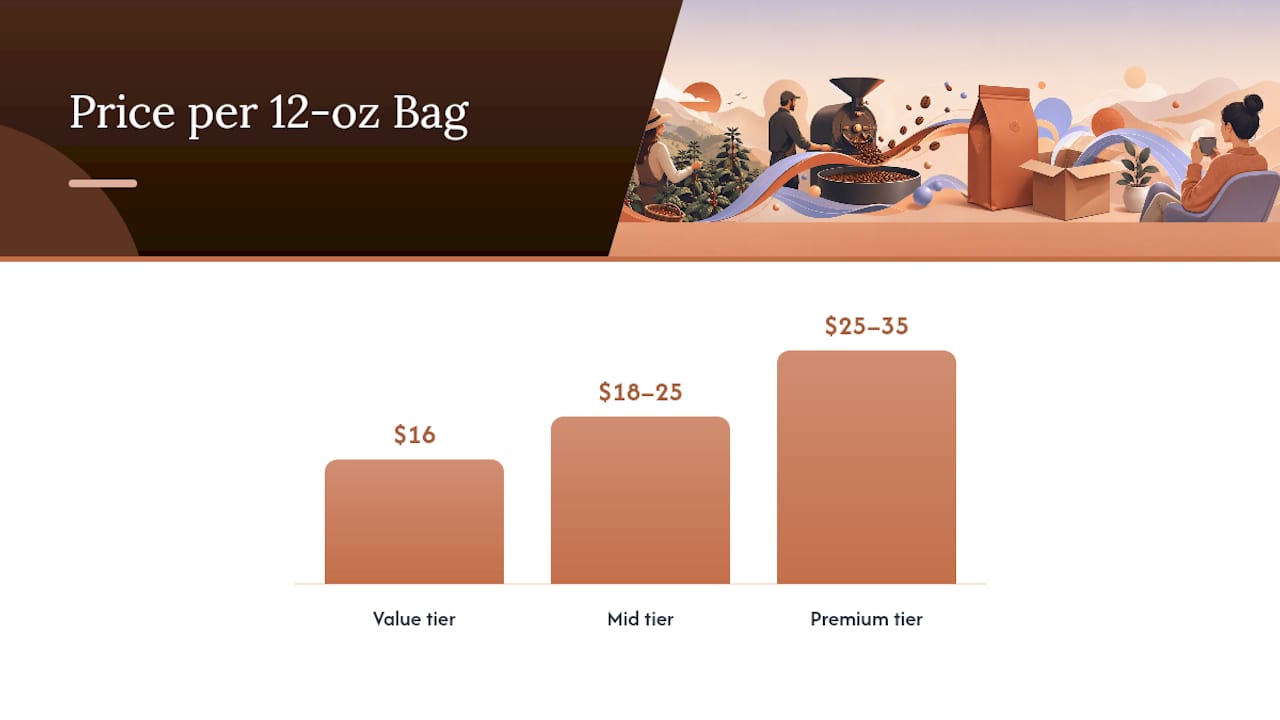
Value tier: This is where you find pre-roasted, shelf-stable coffee that’s been sitting for weeks before it ships. Bag sizes tend to run standard at 12 ounces, occasionally larger at 16 ounces to soften the per-ounce math. Roast types skew toward blends rather than single origins, since blending masks inconsistency in bulk-sourced beans. Free shipping often kicks in around $35 to $40 in cart value, which usually means bundling two bags per order.
Mid tier: $18 to $25 per 12-oz bag. Most widely available specialty subscriptions live here, and it’s arguably the sweet spot for people who want real quality without premium pricing. You’ll typically see single-origin options alongside blends, roast dates printed on the bag, and more flexibility on grind type. Some services in this band roast to order rather than pulling from a warehouse shelf, which changes freshness meaningfully.
Premium tier: $25 to $35 per 12-oz bag. Here you’re paying for traceability. Farm-level sourcing, limited lots, and detailed origin reports become standard. MasteringCoffee’s roundup notes that premium single-origin subscriptions commonly start near this range and climb from there depending on rarity.
Specialty/limited tier: $35 to $42+ per 12-oz bag. Rare micro-lots, competition-grade coffees, and small-batch experimental roasts land here. These aren’t everyday drinking coffees for most households. They’re occasional treats or gifts.
A few things hold true across every tier:
- Sampler boxes and small-format bags (4 to 6 oz) offer the lowest entry price but the worst per-ounce value, since shipping and packaging costs get spread over less coffee.
- Roast-to-order coffee generally costs more than pre-roasted stock because it can’t be produced and shipped in bulk ahead of demand.
- Ground coffee options sometimes carry a small premium over whole bean, reflecting the extra equipment and labor.
- Curated or “roaster’s choice” plans tend to sit at the lower end of their tier, since you’re not paying for the customization of picking specific origins.
If you’re trying to figure out where your current coffee habit falls, start by checking your bag size and whether your roaster lists a roast date. No date printed anywhere is usually a sign you’re in value-tier territory, regardless of what the marketing copy says.
How Delivery Frequency Changes Your Monthly Coffee Bill
Here’s the part most people get wrong when comparing subscription costs: they compare per-bag price and stop there. But cadence, not bag price, usually decides your actual monthly spend. Two subscriptions priced identically per bag can produce wildly different monthly totals depending on how often they ship.
Consider a $20, 12-ounce bag. Wirecutter’s cost breakdown shows how much cadence alone moves the number:
- Weekly delivery of one 12-oz bag results in a relatively high monthly spend suited to a household of several heavy drinkers or a small office.
- Biweekly delivery (every two weeks) results in a moderate monthly spend, fitting for a two-person household with moderate consumption.
- Monthly delivery of one 12-oz bag costs about $20, fitting a solo drinker who has one or two cups a day.
- Every four weeks, the cadence some services default to, comes out close to that same $20 figure but stretches slightly longer between shipments, which matters if you’re trying to avoid running out.
Bag size interacts with cadence in a way that’s easy to miss. Switching from a 12-ounce bag every two weeks to a 2-pound (32-ounce) bag every month delivers almost the same amount of coffee but usually at a lower per-ounce rate, because larger formats spread fixed packaging and shipping costs over more product. Many roasters and subscription services build in bulk discounts for 2-lb or multi-bag orders, on top of the per-ounce savings you get automatically from buying bigger.
For a solo drinker averaging one to two cups daily, a 12-ounce bag typically lasts two to three weeks. That points toward monthly delivery as the natural fit, not biweekly. For a two-person household drinking three to four cups combined per day, biweekly 12-ounce delivery or monthly 2-pound delivery both work, and the 2-pound option is usually cheaper per ounce.
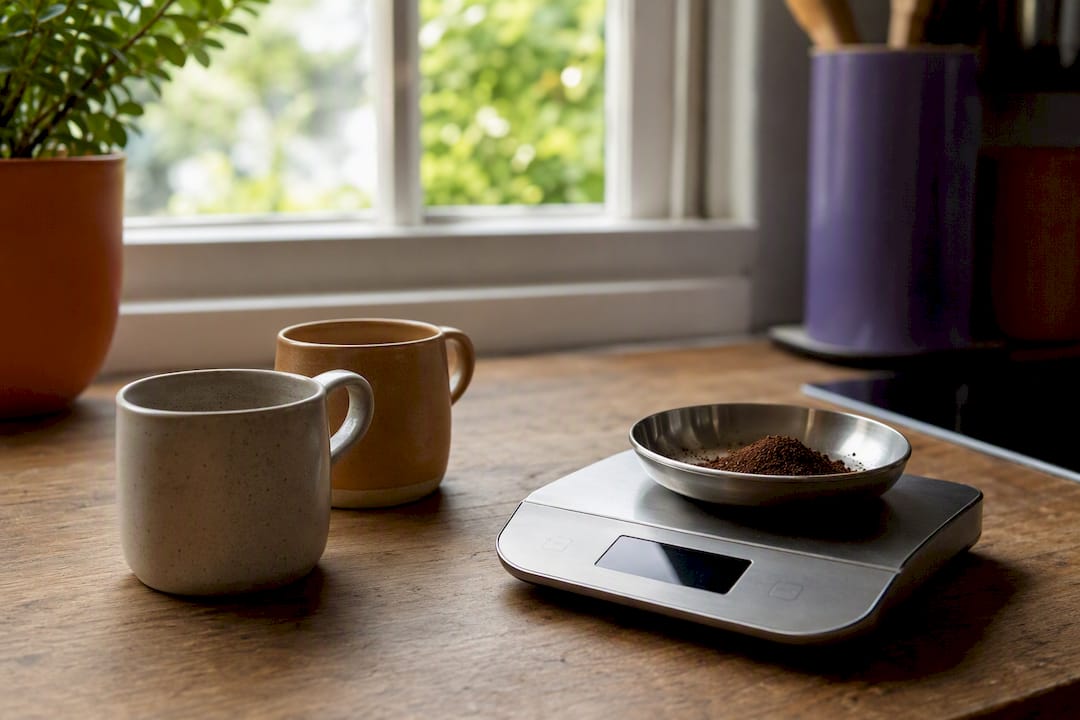
Pro Tip: If you’re not sure how much coffee you actually drink, weigh your current bag when it arrives and again when you’re down to your last cup. Divide the used weight by the number of days it lasted. That number, multiplied by 30, tells you your real monthly need better than any guess.
What Hidden Fees Push Your Real Cost Higher?
The advertised per-bag price is rarely the whole story. Shipping is the biggest variable, and it works differently across the subscription market than most people expect.
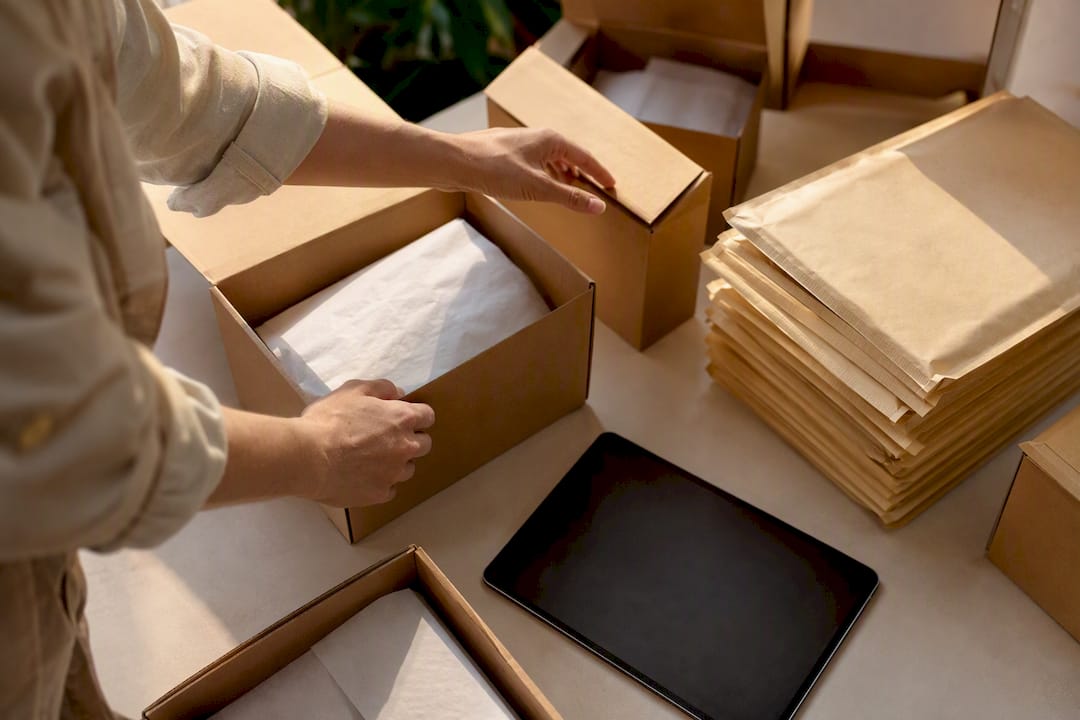
Some services build shipping into the subscription price permanently, so what you see is what you pay every time. Others charge flat shipping fees on every order regardless of size, which quietly inflates the cost of small or infrequent shipments. Many set a free-shipping threshold, often somewhere in the $35 to $50 range, meaning single-bag orders get hit with a fee while two-bag or multi-item orders ship free.
That threshold structure creates a strange incentive: ordering more at once can lower your effective per-ounce cost even though your total order is bigger. A single 12-oz bag that misses the free-shipping cutoff by $5 might cost more per ounce than two bags ordered together that clear it.
Sampler boxes deserve specific caution here. A $14 sampler sounds like a bargain next to a $22 full bag, but when you account for the reduced quantity, the price per cup is often higher, not lower. Packaging and shipping costs don’t scale down proportionally with a smaller bag, so you’re paying nearly the same fixed overhead for a fraction of the coffee.
A few ways to sidestep the fees that inflate real cost:
- Check whether the subscription price already includes shipping before comparing it to a competitor’s “shipping not included” price.
- Look for a stated free-shipping threshold and size your order to clear it, rather than ordering the minimum and eating a flat fee.
- Ask whether the service offers a recurring-order discount; some roasters advertise around 10% off subscription orders compared to one-time purchases, which can offset a slightly higher sticker price.
- Skip sampler formats for your everyday coffee and save them for actually trying new origins.
How to Calculate the Real Per-Cup Cost of Your Subscription
Comparing two subscriptions by bag price alone is like comparing two cars by the size of their gas tank. What you actually want to know is cost per mile, or in this case, cost per cup. The formula isn’t complicated:
- Add up your total cost per shipment: bag price, plus your share of shipping (if any), plus tax.
- Estimate cups per bag: a standard assumption is about 10 grams of ground coffee per 6-ounce cup, which works out to roughly 34 cups from a 12-ounce (340-gram) bag, or about 68 cups from a 2-pound bag. Adjust up or down based on how strong you brew.
- Divide total cost by cups per bag to get your per-cup price.
Here’s how that plays out with real numbers. A $20, 12-ounce bag with free shipping and no tax, at 34 cups per bag, comes to about $0.59 per cup.
Now scale up. A $34, 2-pound bag with free shipping, yielding about 68 cups, works out to roughly $0.50 per cup. Even though the sticker price is higher, the larger format wins on a per-cup basis because shipping and packaging costs are fixed regardless of bag size and get spread over twice the coffee.
This is the math that exposes why sampler boxes and small-format bags, despite their appealing low entry price, are almost always the most expensive way to drink specialty coffee per cup. The Comparing Coffee Subscription Plan Tiers breakdown walks through this same math across different plan structures if you want to run your own numbers against specific tiers.
How to Pick a Subscription That Fits Your Budget and Taste
Price matters, but it’s only useful in context. A cheap subscription that ships stale coffee isn’t a deal. It’s a waste of money you’ll spend twice, once on the bag and again on the coffee you end up throwing out because it tastes flat.
Before you subscribe to anything, run through these questions:
- Is there a roast date printed on the bag, and how recent is it typically? Coffee roasted more than a few weeks before it ships has already lost a meaningful amount of flavor complexity.
- Can you adjust bag size and cadence without canceling and restarting? Flexibility here is what lets you match cost to actual consumption instead of overpaying for coffee that goes stale before you finish it.
- What grind options are available, and is there a fee for grinding? If you don’t have a grinder at home, this affects both cost and convenience.
- Does the price include shipping, or is there a threshold you need to hit? You need this number to do accurate per-cup math.
- Is the coffee single-origin, blended, or curated by the roaster? This affects both price and how much say you have over what shows up at your door.
Red flags worth taking seriously: no roast date anywhere on the packaging or website, vague sourcing language without named regions or farms, and pricing pages that make it hard to find the actual per-bag cost before you enter payment information. If a subscription’s marketing leans heavily on discounts and urgency rather than describing the coffee itself, that’s usually a sign the coffee isn’t the main selling point.
How Roast-to-Order and Sourcing Choices Affect What You Pay
Moustache Coffee Club roasts to order rather than pulling from pre-roasted inventory, which is the single biggest lever on freshness. Coffee roasted and shipped the same day retains more of its aromatic compounds than coffee that’s been sitting on a shelf for two or three weeks before it reaches your door, and roast-date transparency is consistently flagged as one of the features most worth paying for.
That freshness has a cost, and it shows up as a slightly higher per-bag price than warehouse-roasted alternatives. But it also changes the value equation on the other side of the ledger:
- Personalization through feedback means your bag selections improve over time instead of you paying for coffees that don’t match your taste and end up half-finished.
- Ethical sourcing from regions like Ethiopia and Colombia adds traceability you can verify, which matters if you care where your money actually goes.
- Reduced plastic packaging raises production costs marginally but cuts the environmental footprint of every shipment, a tradeoff worth weighing against the eco-friendly checklist many households now use to vet subscriptions.
None of this makes Moustache Coffee Club the cheapest option on the market. It makes it a better cost-per-cup value for anyone who’s tired of coffee that tastes tired by the time it arrives.
The Real Tradeoff Between Cheap Coffee and Fresh Coffee
Most people don’t actually want the cheapest coffee subscription. They want the cheapest subscription that still tastes good, and those aren’t the same thing. If you’re drinking two cups a day and can’t tell the difference between a coffee roasted last week and one roasted six weeks ago, the value tier will serve you fine, and there’s no shame in that.
But if you’ve ever had a truly fresh, roast-to-order single origin and noticed how much more flavor came through, you already know why some people pay more. The premium isn’t for the bag. It’s for the three or four days between roasting and your first cup, when the coffee is at its best. That window closes fast, and pre-roasted stock has usually already missed it before it ships.
My honest read: pay for roast-to-order if you drink coffee daily and actually taste it. Stick with value-tier subscriptions if coffee is fuel, not a ritual. Both are rational choices. Just know which one you’re making.
— Sean
Try Moustache Coffee Club’s Roast-to-Order Subscription
Moustache Coffee Club skips the warehouse shelf entirely. Every bag is roasted to order in the ultra-light, Nordic-style tradition and shipped the same day, so what arrives at your door is days old, not weeks.
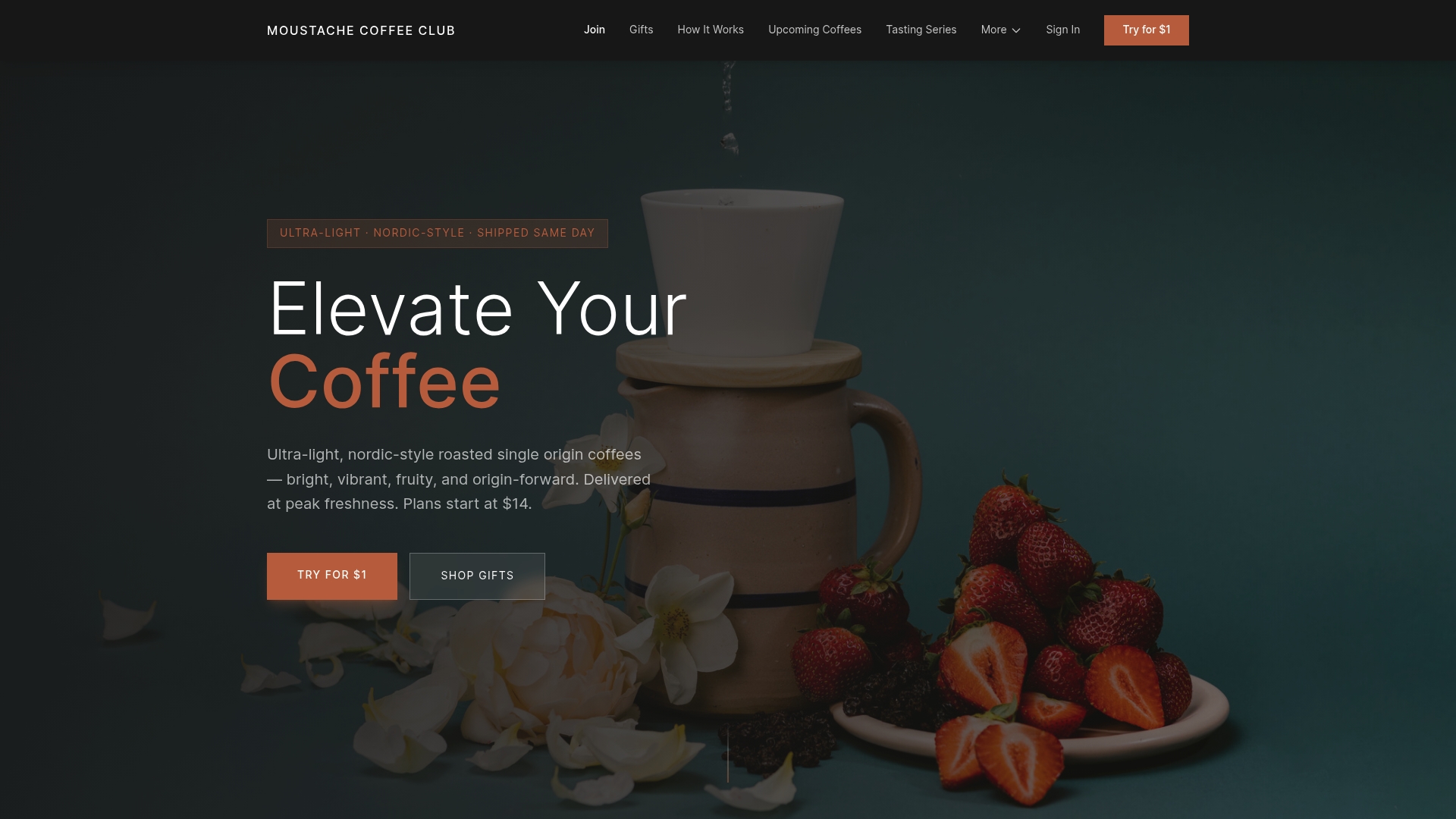
Pricing is listed clearly before checkout, with transparent shipping terms and no surprise fees buried at the cart stage. You choose your plan, share feedback on the coffees you receive, and future selections get sharper based on what you actually like, whether that’s a bright Ethiopian natural or a structured Colombian washed process. Bag sizes and delivery frequency are adjustable, so you can match the subscription to how much coffee your household actually drinks instead of overpaying for a cadence that doesn’t fit. Gift subscriptions and limited-edition tasting series are also available for anyone who wants to introduce someone else to roast-to-order coffee without committing them to a long-term plan.
If you’re ready to see what freshly roasted, single-origin coffee actually tastes like, start a subscription and pick your first bag today.
Sources
- 12 Best Coffee Subscriptions, Reviewed & Reordered (2026) | Bon Appétit
- Best Coffee Subscription Services in 2026 | MasteringCoffee
- Our Favorite Coffee Subscriptions | Reviews by Wirecutter
- Coffee Subscriptions | Save 10% on Exceptional Coffee – Kaldi’s Coffee
FAQ
Is a Coffee Subscription Worth the Cost?
For daily drinkers who value freshness, yes. A roast-to-order subscription typically costs about $0.50 per cup once you account for shipping, which competes well against café prices and beats stale grocery-store coffee on taste.
What Is the Cheapest Coffee Subscription Option?
Value-tier subscriptions running $12 to $18 per 12-ounce bag are the cheapest, though sampler boxes and small-format bags often cost more per cup despite a lower sticker price.
What Is the Best Coffee Subscription Service in the US?
The best fit depends on how much you value freshness versus price; roast-to-order services like Moustache Coffee Club deliver higher per-cup value for daily drinkers who notice the difference fresh roasting makes.
Why Is Coffee So Expensive Right Now?
Specialty coffee pricing reflects sourcing quality, traceability, and freshness practices like roasting to order, all of which cost more to deliver than bulk pre-roasted stock sitting on a shelf for weeks.
How Do I Calculate the Real Per-Cup Cost of My Subscription?
Add your bag price, shipping, and tax, then divide by the estimated cups per bag, roughly 34 cups for a 12-ounce bag using standard 10-gram servings.