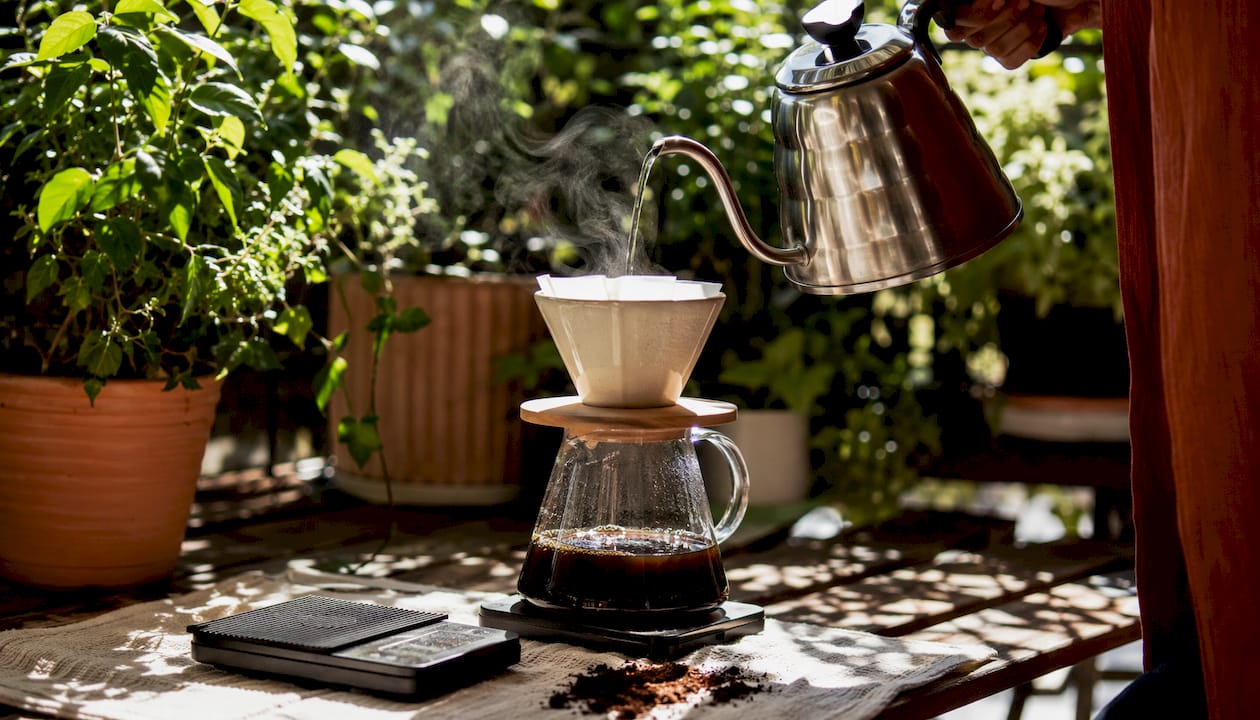
Barista One Variable Rule to Fix Bitter Coffee at Home

Your coffee is most likely bitter because of over-extraction: too fine a grind, too long a brew, or water that’s too hot. Roast choice matters too, since darker roasts carry more bitter compounds than lighter ones. The two fastest fixes are coarsening your grind and shortening your brew time. If you need a stopgap right now, a tiny pinch of salt or a splash of milk can tame an over-bitter cup while you troubleshoot.
TL;DR:
- Adjusting grind size to be coarser and shortening brew time can significantly reduce bitterness caused by over-extraction.
- Running one-variable tests—such as grind, brew time, or temperature—is essential to accurately identify the root cause of bitterness.
- Using lighter, fresher beans or switching to Nordic-style roasts can prevent roast-derived bitterness that brewing tweaks cannot fix.
- Proper water management through mineral control and equipment cleaning can mitigate harshness caused by water quality issues.
- Small additions like salt or milk can temporarily soften bitterness, but addressing the brewing variables and roast choice offers a more permanent fix.
Table of Contents
- Quick fixes: 5 immediate things you can try in minutes
- Diagnose the cause: an easy one-variable-at-a-time checklist
- Variable-by-variable fixes: grind, brew time, temperature, dose, and roast choice
- Water and equipment matters: minerals, filtration, and cleaning
- Additives and hacks: salt, milk, and sweeteners: what they do and when to use them
- Taste verification: a short method to check whether the fix worked
- How our resources reduce bitterness: brewing guides, roast notes, and fresh beans
- A barista’s one-variable rule for home brewers
- Try lighter, fresher beans: our subscription options
- FAQ
- Sources
Quick fixes: 5 immediate things you can try in minutes
Before you dig into diagnosis, try these adjustments. Most bitter cups respond to one of them within a single brew cycle.
- Coarsen your grind by one step on your grinder’s dial and brew again with the same timing.
- Shorten your brew time: pull a pour-over 30 seconds earlier or cut immersion steep time by a minute.
- Let boiled water rest 30 to 60 seconds before pouring, since this is a low-effort way to cool water into a gentler range.
- Reduce your coffee dose slightly if the cup tastes overly concentrated rather than simply harsh.
- Add a tiny pinch of salt directly to the grounds or the finished cup, or a small splash of milk, as a last-resort fix.
These quick fixes won’t save every cup. If your beans are weeks past their roast date and taste flat or papery, no amount of tweaking grind or time will bring back flavor that’s already gone stale.
Diagnose the cause: an easy one-variable-at-a-time checklist
Bitterness has more than one source, so guessing rarely works. Run a controlled test instead: change exactly one variable, brew, taste, and write down what happened before touching anything else.
- Brew your usual recipe and taste it first, paying attention to whether the bitterness feels harsh and drying (a sign of over-extraction) or rounded and persistent through every sip (more likely roast-derived).
- Adjust only the grind size, keep everything else identical, and brew again.
- If grind alone didn’t fix it, reset to your original grind and test only brew time next.
- If timing wasn’t the issue, reset again and test only water temperature.
- For pour-over, watch your flow: water pooling on top or draining in under two minutes usually signals a grind or channeling problem rather than a roast problem.
Cardboard or papery notes point to stale or old beans, which no variable adjustment will fix.
Variable-by-variable fixes: grind, brew time, temperature, dose, and roast choice
Each brewing variable pushes bitterness in a specific direction, so it helps to understand the mechanism before you adjust it.
- Grind size: finer grounds expose more surface area to water, which speeds extraction and pulls out bitter compounds faster. Move one step coarser on a standard dial grinder and taste before adjusting again.
- Brew time and flow: for drippers, a shorter pour or faster drawdown reduces contact time. For immersion methods, cut the steep by a minute. For espresso-style brewing, a shorter shot time with the same dose usually means a coarser grind is needed upstream.
- Temperature: avoid pouring water straight off a boil. Letting it rest briefly, per the SCA’s overview on extraction and bitterness, keeps you out of the aggressive extraction zone that pulls bitter compounds out faster than flavor compounds.
- Dose and concentration: a stronger brew carries more total dissolved solids, and higher TDS reads as more bitter even when extraction percentage is identical. Lowering your dose slightly softens the cup without changing technique.
- Roast and bean choice: when bitterness persists across sips regardless of grind or time, the roast itself is likely the source. Darker roasts contain higher concentrations of roast-derived bitter compounds and are more soluble, so switching to a lighter roast or a different origin often solves what brewing technique cannot. Our guide to dialing in light roast coffee walks through grind and dose adjustments specific to lighter beans.
Pro Tip: Change only one variable per brew. Testing grind and temperature together tells you nothing about which one fixed or ruined the cup.
Water and equipment matters: minerals, filtration, and cleaning
Water makes up most of your cup, and its mineral content changes how fast and how fully coffee extracts. Very hard water extracts minerals faster and can amplify harshness, while filtered or softer water tends to produce a smoother result. In the rare case where water is extremely soft and the cup tastes flat or oddly sharp, a tiny pinch of salt can help round it out.
Dirty equipment adds its own bitterness, often from rancid coffee oils rather than extraction at all.
- Descale your kettle or machine regularly if you’re in a hard water area, since mineral buildup changes how water flows and heats.
- Replace water filters on schedule rather than waiting for a visible drop in taste.
- Clean grinder burrs periodically to remove stale coffee oils that turn rancid and bitter.
- Rinse your brewer, carafe, or French press with hot water after every use, not just a rinse under cold tap water.
Additives and hacks: salt, milk, and sweeteners: what they do and when to use them
Salt doesn’t remove bitter compounds, but rinsing after coffee consumption protects enamel and taste, as explained by Stop Oral Care. It suppresses how strongly your taste receptors respond to them, which is why a tiny pinch in the grounds or finished cup can make an over-extracted coffee taste smoother without making the cup taste salty.
- Use the smallest pinch you can manage. Too much salt flattens flavor entirely rather than just softening bitterness.
- Dairy and plant milks mask bitterness effectively but also mute the origin character you’re paying for in specialty beans.
- Sugar and sweeteners cover bitterness short-term but don’t address whatever is causing it in the first place.
Caffeine contributes only about 10 to 15% of perceived bitterness in a typical cup, with most of the rest coming from roasting byproducts and Maillard reaction compounds that build up as roast level darkens. If you’re reaching for cream and sugar on most cups, that’s usually a sign to look at your brewing variables rather than lean on masking.
Taste verification: a short method to check whether the fix worked
Taste the same way every time: a quick sip for immediate impression, then a slower sip once the coffee cools slightly, since bitterness and astringency show up differently at different temperatures. Harsh, drying, mouth-puckering sensations point to astringency from over-extraction. A rounded, lingering bitterness that doesn’t fade points to roast.
Log your grind setting, brew time, and water temperature for each trial, and only count a change as a real fix if the bitterness drops noticeably on the next cup. If you’ve isolated grind, time, and temperature and bitterness still lingers, the roast itself is probably the limiting factor, and it’s time to try a different bean.

How our resources reduce bitterness: brewing guides, roast notes, and fresh beans
Our extraction guide breaks down TDS and grind charts so you can run the variable tests above with real numbers instead of guesswork.
- Nordic-style roasting tends to limit the buildup of roast-derived bitter compounds compared to darker roasting.
- Shipping beans soon after roasting means less time for oils to go stale before they reach your grinder.
- Our cold brew grind guide shows how coarser grinds sidestep bitterness entirely for a different brewing style.
A barista’s one-variable rule for home brewers
The rule I give every home brewer is simple: change one thing, taste, write it down, repeat. Grind, then time, then temperature, never all three in the same pot. The most common mistake I see is someone adjusting grind, water temperature, and dose all in one brew, then having no idea which change actually helped.
— Sean
Try lighter, fresher beans: our subscription options
A coarser grind and shorter brew time fix extraction problems, but if bitterness keeps showing up no matter what you adjust, the roast itself is probably the ceiling. Switching to a Nordic-style roast cuts down on the roast-derived bitter compounds that no brewing tweak can undo, and freshly roasted beans arrive with less chance to turn stale and flat.

Browse our subscription plans to find a single-origin roast that suits your taste, or send one as a gift subscription to someone who’s tired of masking bitterness with cream and sugar.
FAQ
How do you take bitterness out of coffee?
Coarsen your grind, shorten your brew time, and let boiled water cool for 30 to 60 seconds before brewing. If the cup still tastes bitter after isolating those variables, the roast itself is likely the source, and switching to a lighter roast usually solves it.
Why is my coffee so bitter today?
A single day’s bitterness often traces back to a small change you didn’t notice: a slightly finer grind setting, water that boiled longer than usual, or beans that have started to go stale. Run a quick one-variable test, starting with grind size, to isolate what shifted.
How to take the bitterness out of coffee without sugar?
A tiny pinch of salt in the grounds or finished cup suppresses the taste receptors’ response to bitterness without adding sweetness or masking the coffee’s own flavor. Adjusting grind size and brew time addresses the root cause instead of just covering it.
How do you neutralize bitterness?
Salt is the most direct sensory tool, since sodium ions specifically suppress bitter taste perception rather than adding a competing flavor. Milk and plant-based alternatives also soften bitterness but mute other flavors in the cup along with it.
Sources
- How to Make Coffee Less Bitter, According to Experts — Martha Stewart
- Why Is Coffee Bitter? The Chemistry of Coffee Bitterness — Coffee Studies
- Coffee Decoded: What Makes Coffee Bitter? — Specialty Coffee Association