What Is Included in a Coffee Tasting Box?
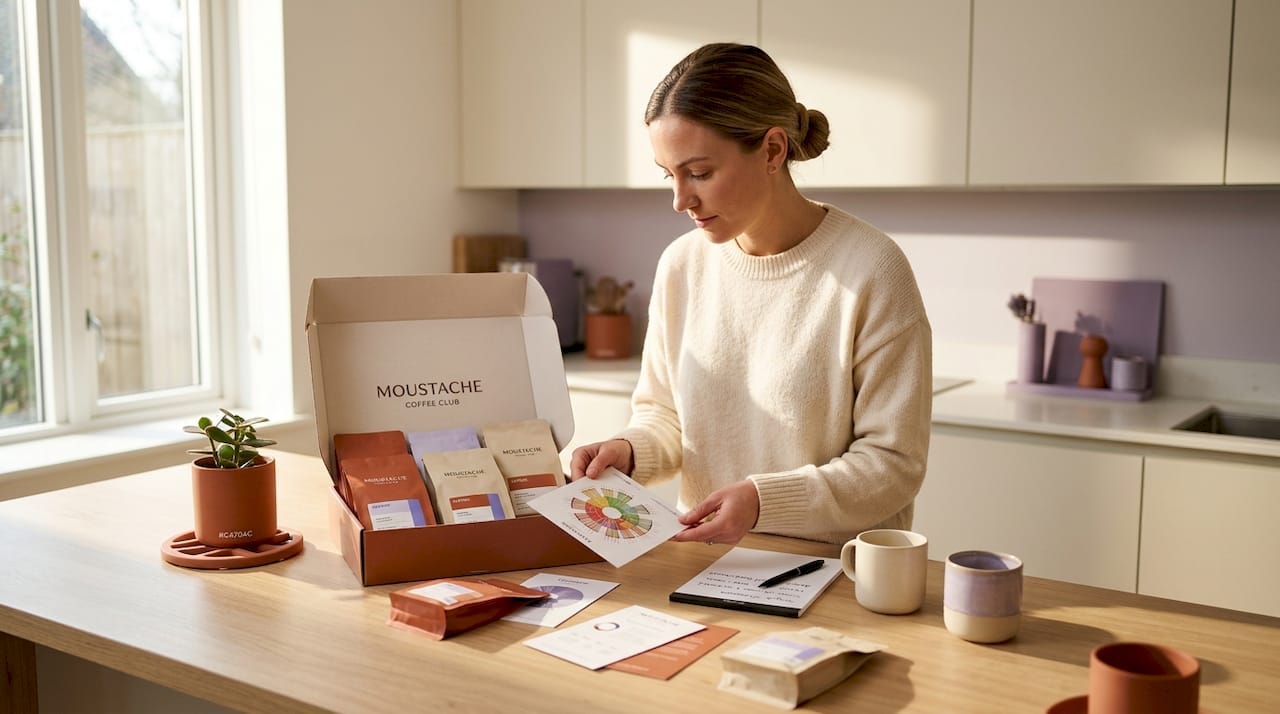
Most people assume a coffee tasting box is just a few sample bags in a pretty package. It is not. Understanding what is included in a coffee tasting box reveals a genuinely layered experience, one that combines carefully curated coffee samples, sensory education tools, and detailed origin information. Whether you are buying one as a gift, exploring specialty coffee on your own, or hosting a tasting event with friends, knowing exactly what to expect helps you get far more out of the experience.
Table of Contents
- Key takeaways
- What is included in a coffee tasting box
- What premium and educational tasting boxes add
- Choosing a box for your situation
- How to use your tasting box effectively
- My honest take on what actually matters in a tasting box
- Explore what Moustache Coffee Club’s tasting boxes offer
- FAQ
Key takeaways
| Point | Details |
|---|---|
| More than just coffee | Most boxes include tasting notes, flavor wheels, and rating sheets alongside the coffee samples themselves. |
| Sample sizes matter | Typical samples range from 2oz to 4oz, enough for multiple brews per origin without sacrificing freshness. |
| Format shapes your experience | Whole bean samples offer higher quality and freshness; ground samples trade convenience for some flavor nuance. |
| Premium boxes go further | High-end kits may include blind tasting materials or pharmaceutical-grade flavor capsules for sensory calibration. |
| Brewing gear is rarely included | You will need your own dripper or press; most boxes focus on coffee and educational materials only. |
What is included in a coffee tasting box
The core of any tasting box is the coffee itself, but the specifics vary more than most people expect. Here is what you will typically find inside.
Coffee samples are the obvious starting point. Most boxes contain between four and eight individual samples, each from a different origin, farm, or roast profile. Sample sizes range from about 2oz to 4oz per bag, which gives you enough for two to four brews per sample without overwhelming your pantry.
The format question matters. Whole bean packages generate larger revenue shares than ground coffee due to higher pricing and perceived quality, and specialty enthusiasts strongly prefer them. That said, ground coffee represents 60 to 65% of total market volume in tasting sets, largely because of convenience. If you have a grinder at home, always choose whole bean. The flavor difference after grinding fresh is noticeable.
Beyond the coffee bags, most boxes include:
- Tasting notes or information cards covering each coffee’s origin, farm, altitude, processing method, and expected flavor profile
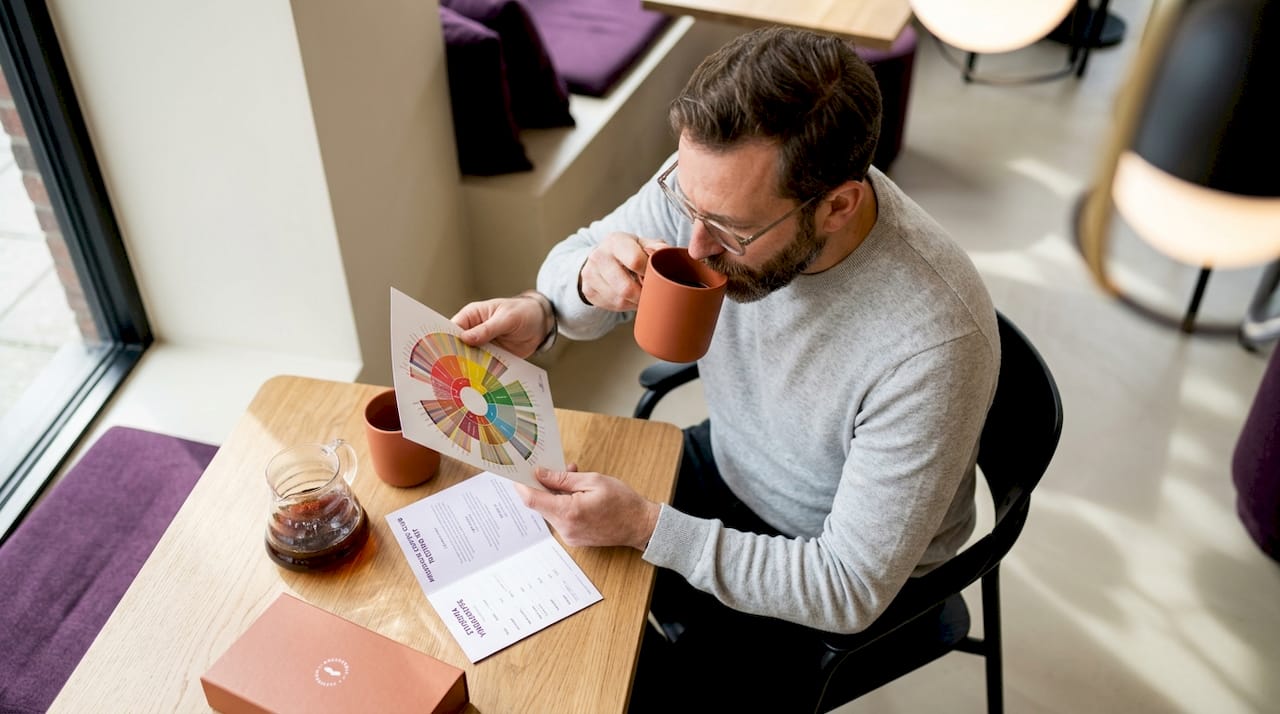
- A flavor wheel or simplified version of one, helping you translate vague impressions like “bright” or “rich” into recognizable descriptors like citrus, caramel, or jasmine
- A rating sheet where you score aroma, body, acidity, sweetness, and aftertaste for each sample
- Brewing recommendations suggesting the ideal method (pour-over, French press, AeroPress) for each specific coffee
Flavor wheels in tasting kits help users articulate and categorize flavor notes, which supports objective comparison across samples. That matters a lot when you are tasting four or five coffees in one session and trying to remember what made the Ethiopian different from the Colombian.
Pro Tip: Before opening any samples, read every information card first. Setting flavor expectations before you brew is not cheating. It actually trains your palate to detect specific notes more reliably over time.
What premium and educational tasting boxes add
A standard box gets you the coffee and the cards. A premium or educational box gets you much closer to what professional Q-graders actually experience. The difference is significant.
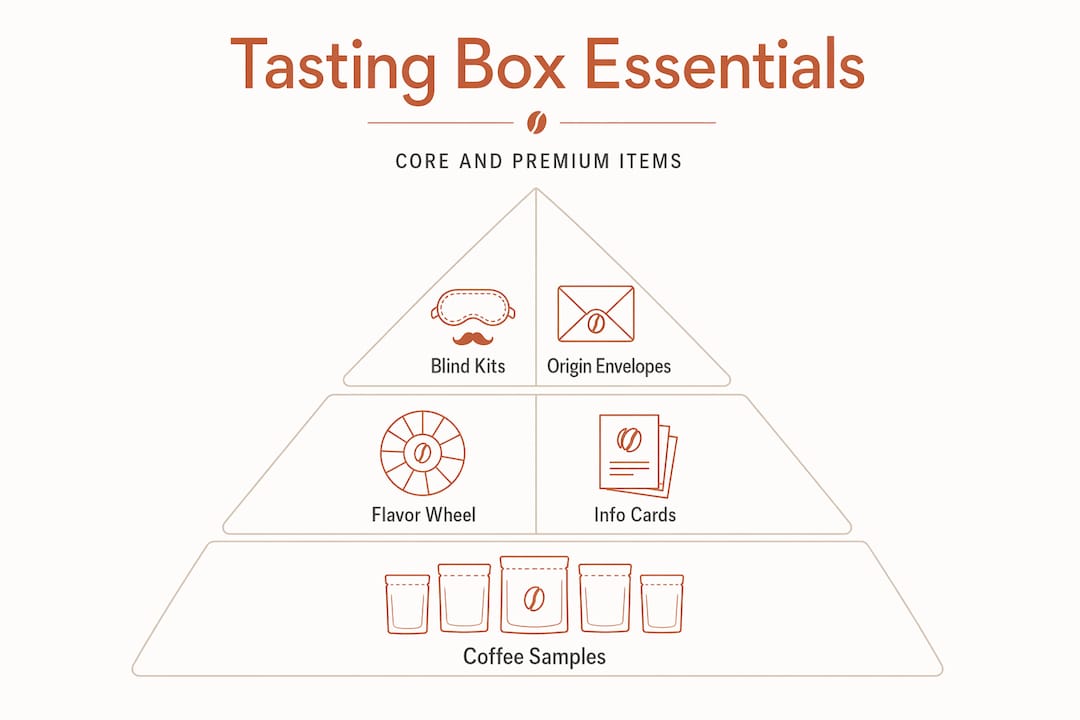
The most advanced feature you will find in high-end kits is sensory calibration tools. Professional coffee sensory kits include pharmaceutical-grade flavor capsules covering 24 standardized flavor notes from the World Coffee Research flavor wheel, with each standard packaged in blister packs to protect accuracy. You add a capsule to a neutral liquid and taste it, building a clear mental reference for what “stone fruit” or “roasted almond” actually smells and tastes like before you encounter it in a cup. It is a step most home tasters skip entirely, and it is also why professionals develop palates so much faster.
Another premium feature worth knowing about is blind tasting design. Blind tasting kits use sealed envelopes to remove confirmation bias, letting you evaluate a coffee purely on its merits before revealing the origin or brand. This matters more than it sounds. When you know a coffee comes from Ethiopia, your brain often supplies the expected blueberry note whether it is actually present or not.
“Blind tasting is one of the most honest and educational things you can do with coffee. It strips away expectation and forces you to actually listen to what is in the cup.”
Other components of a coffee tasting box you may find in premium sets include:
- Sustainably sourced packaging materials, often with reduced plastic or compostable bags
- Curated single-origin selections focused on one region, allowing you to taste processing method differences within the same origin
- QR codes linking to video content, farm photography, or audio tasting guides
- Detailed brewing guides specific to ultra-light or Nordic-style roast profiles
Single-origin tasting sets are the fastest-growing sub-format in the specialty coffee market, growing 12 to 15% annually as more consumers seek out comparative tasting at home. That growth makes sense. Tasting three washed Ethiopians processed differently teaches you far more than tasting three coffees from three different continents ever could.
Choosing a box for your situation
The coffee tasting box items that matter most depend heavily on why you are buying and who will be using it. The contents and design vary quite a bit across these different use cases.
| Use Case | Best Box Type | Key Items to Look For |
|---|---|---|
| Solo exploration | Single-origin sampler | Tasting notes, flavor wheel, 4 to 6 samples |
| Group tasting event | Multi-pack with rating sheets | Identical samples per person, scoring cards |
| Gift for beginners | Curated themed set | Clear instructions, approachable flavor profiles |
| Serious learning | Educational or blind kit | Sensory calibration tools, blind tasting materials |
| Coffee gift for enthusiasts | Specialty artisan box | Rare origins, whole bean, premium packaging |
For groups and tasting parties, you want a box where every participant can taste the same coffees simultaneously and compare notes. Individual boxes work well for solo exploration or as a coffee tasting experience gift where the ritual of unboxing is part of the pleasure.
Gift-oriented packaging tends to emphasize presentation: rigid boxes, tissue wrap, wax seals, and personalization options. If the experience lives or dies by its first impression on someone else, that presentation layer is not trivial. You can also learn more about how to recognize artisanal coffee gifts that carry genuine quality behind the aesthetics.
One thing worth noting: tasting boxes rarely include brewing equipment. Most kits focus entirely on coffee and educational materials. If you or the recipient does not already own a grinder, scale, and dripper, plan for that gap before the box arrives.
How to use your tasting box effectively
Getting the most out of a coffee tasting box takes a bit of structure. Here is how to approach it.
-
Set up your space before you start. Clear the counter, get your brewing gear ready, and have a notepad or the included rating sheet in front of you. Rushing a tasting is the fastest way to miss what makes each coffee interesting.
-
Brew each sample the same way. Use the same brewing method, grind size, water temperature, and ratio across all samples. Changing variables between brews means you are tasting technique differences, not coffee differences.
-
Use the flavor wheel actively. Do not just glance at it. After you smell and taste each coffee, scan the wheel and see which section matches your impression. This habit builds vocabulary faster than any other practice.
-
Write notes before reading the tasting card. Even two or three words count. Once you read the card’s suggested tasting notes, your perception shifts. Capture your honest first impression first.
-
Store any unused samples properly. Sampling size is calibrated to stay fresh across a few sessions, but whole bean samples still need an airtight container away from light and heat. Do not leave bags open between sessions.
-
Approach any blind samples before labeled ones. If your box includes blind tasting elements, always complete those first. You cannot un-know an origin once you have read the label.
Pro Tip: Taste coffee tasting box samples in the morning when your palate is freshest, before you have eaten anything strongly flavored. Even experienced tasters notice a significant difference in detection sensitivity at different times of day.
Blind tasting techniques reduce bias and increase the educational value of any tasting experience, and that effect compounds over time. The more sessions you do this way, the more accurate your palate becomes.
My honest take on what actually matters in a tasting box
I have worked through a lot of coffee tasting boxes over the years, and the thing most people overlook is not the coffee quality. It is the calibration tools.
Most buyers focus on the number of samples and the brand names on the bags. What actually develops your palate fastest is the sensory reference material: the flavor wheel, the rating sheets, and where available, the aroma standards. I have seen people with genuinely average coffee do deep, accurate tasting sessions because they had solid reference tools. And I have seen great coffee completely wasted because the person had no framework to organize what they were tasting.
My other honest observation: single-origin focused boxes teach you more than variety packs. When you taste four coffees from four different continents, you come away with a general sense of diversity. When you taste four Ethiopian naturals from different farms, you come away understanding why coffee tastes the way it does. That is the difference between exposure and education.
If you are new to this, resist the temptation to pick boxes with the most samples. A smaller, well-curated set with strong educational materials will build your palate far faster. For a solid start, the coffee discovery gift guide covers this well.
What beginners most often miss is that the components of a coffee tasting box are meant to work together as a system, not independently. The flavor wheel means nothing without the rating sheet. The samples mean nothing without the brewing structure. Treat the box as a curriculum, not a collection.
— Sean
Explore what Moustache Coffee Club’s tasting boxes offer
Moustache Coffee Club builds tasting boxes around the exact philosophy this article describes: single-origin focus, educational depth, and freshness that actually makes a difference. Every box ships with freshly roasted whole bean samples, detailed origin reports, and tasting guidance built around the ultra-light, Nordic-style roasting approach that preserves each coffee’s natural character rather than masking it with roast flavor.
Whether you want to explore the floral complexity of an Ethiopian natural, understand what altitude does to a Colombian washed coffee, or give a box to someone who deserves better than grocery store beans, Moustache Coffee Club has a structured, curated path for you. The subscription also collects your feedback after each box to refine future selections. Start your subscription and find out what your palate has been waiting to discover.
FAQ
What coffee samples are typically in a tasting box?
Most coffee tasting boxes include four to eight single-origin or themed samples, ranging from 2oz to 4oz each, covering different origins, processing methods, or roast levels depending on the box’s focus.
Do coffee tasting boxes include brewing equipment?
Most do not. Tasting boxes focus on coffee samples and educational materials like flavor wheels and tasting notes. You should have your own grinder, brewer, and scale ready before the box arrives.
What is the difference between a standard and premium tasting box?
Standard boxes include coffee samples and tasting cards. Premium boxes may add blind tasting kits with sealed origin envelopes, pharmaceutical-grade sensory calibration capsules, or advanced brewing guides for a deeper educational experience.
How do I use a flavor wheel from a coffee tasting kit?
After brewing and tasting a sample, scan the flavor wheel from the center outward. Start broad (fruity, nutty, floral) and narrow down to specific descriptors. Write your impressions before reading the included tasting notes to avoid bias.
Are coffee tasting boxes good for groups?
Yes, particularly boxes designed with multiple identical sample portions and group rating sheets. They work well for tasting events, team activities, or any occasion where comparing notes across participants adds to the experience.
Recommended
- How a coffee tasting experience gift delights coffee lovers | Blog | The Moustache Coffee Club
- What Is a Coffee Discovery Gift for Coffee Lovers | Blog | The Moustache Coffee Club
- What is a coffee gift subscription? The perfect gift | Blog | The Moustache Coffee Club
- How to buy specialty coffee: expert tips for flavor and quality | Blog | The Moustache Coffee Club


