Natural Process Coffee Flavor: What It Is and Why It Matters
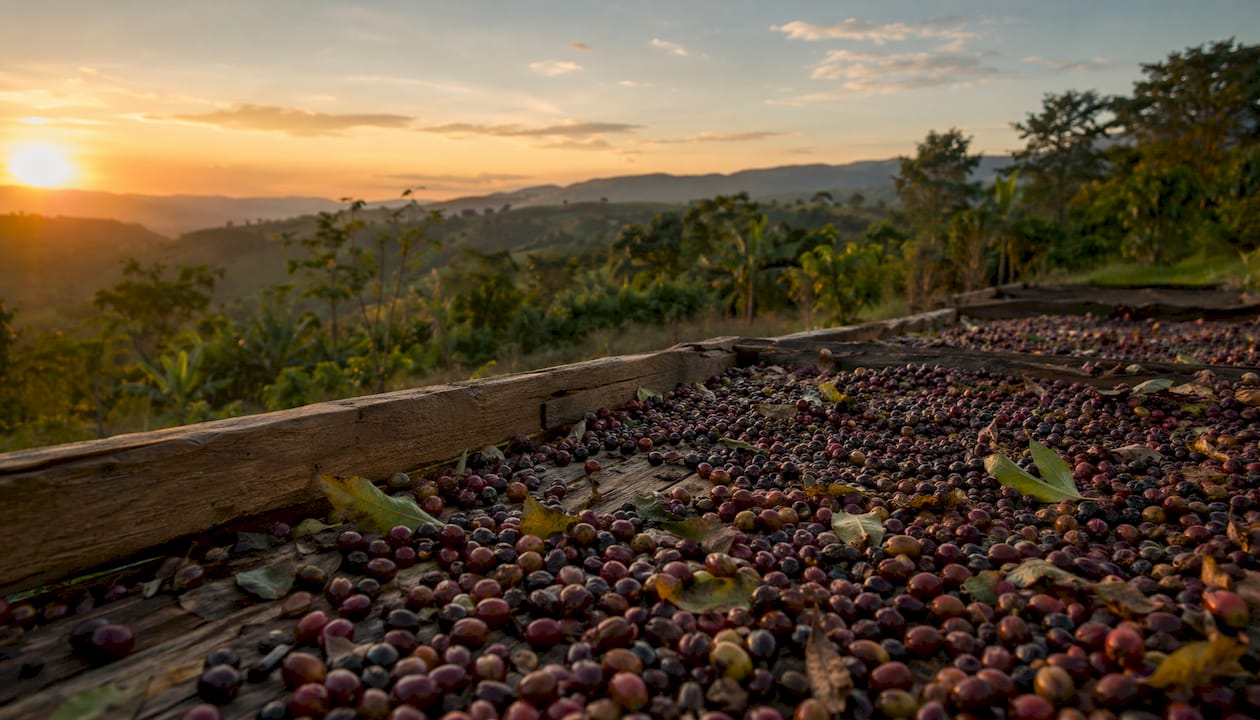
Natural process coffee flavor is defined by the intense fruitiness and sweetness that develop when whole coffee cherries are dried intact, allowing the fruit’s sugars and fermentation compounds to migrate directly into the bean. This method, formally called dry processing, produces a heavier body and fruit-forward flavor that no other processing method replicates. You get blueberry, strawberry, tropical fruit, and wine-like notes in the cup. Moustachecoffeeclub sources natural processed coffees from Ethiopia and Colombia specifically because this method expresses each origin’s character at its most vivid. Understanding what drives these flavors helps you choose, brew, and appreciate natural coffees with real confidence.
What is natural process coffee flavor and how does it form?
Natural process coffee flavor forms during a weeks-long drying stage where the entire cherry, fruit and all, surrounds the bean. The coffee seed absorbs sugars, esters, and fermentation byproducts from the pulp as it slowly dries. No water washing removes those compounds. The result is a cup that tastes more like fruit juice than most people expect from coffee.
The industry term for this method is dry processing, sometimes called the natural or Ethiopian method because Ethiopia has practiced it for centuries. The phrase “natural process coffee flavor” describes the sensory outcome of that method. Both terms refer to the same thing, and specialty coffee professionals use them interchangeably.
This flavor formation is biochemical. As the cherry dries, yeasts and bacteria on the fruit skin ferment the sugars in the mucilage layer. Those fermentation compounds, primarily esters and alcohols, pass through the parchment and into the green bean. That is why a well-made natural coffee from Ethiopia can taste like blueberry jam without any added flavoring.
How natural coffee processing creates distinctive flavor profiles
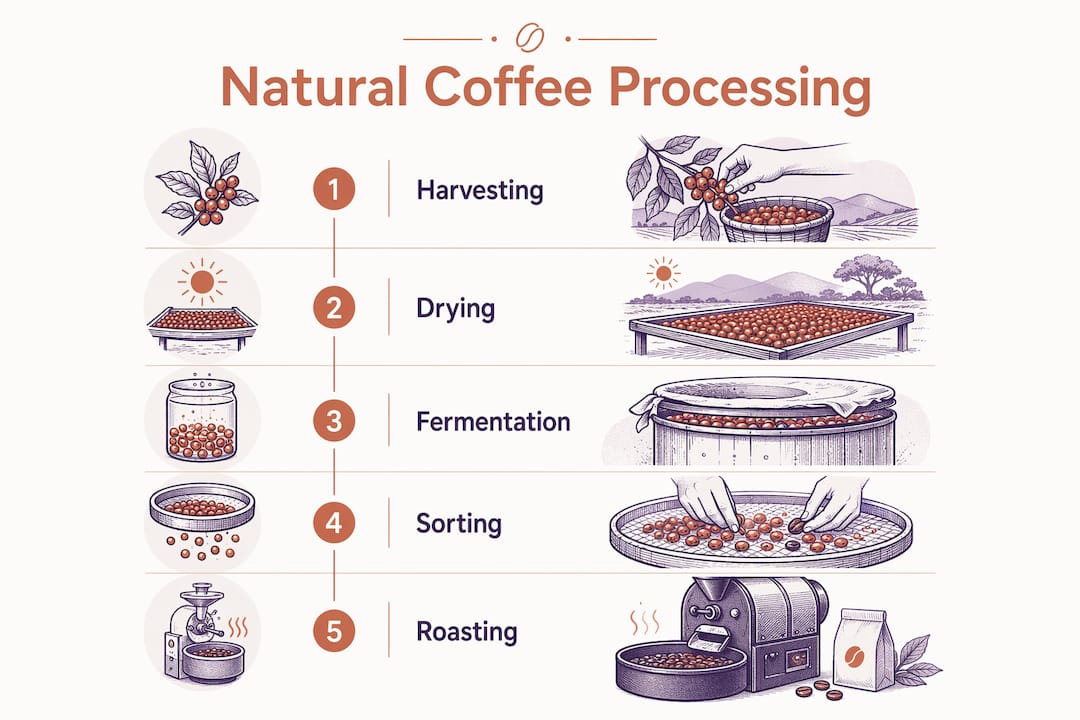
The step-by-step process explains exactly why the flavor turns out the way it does.
-
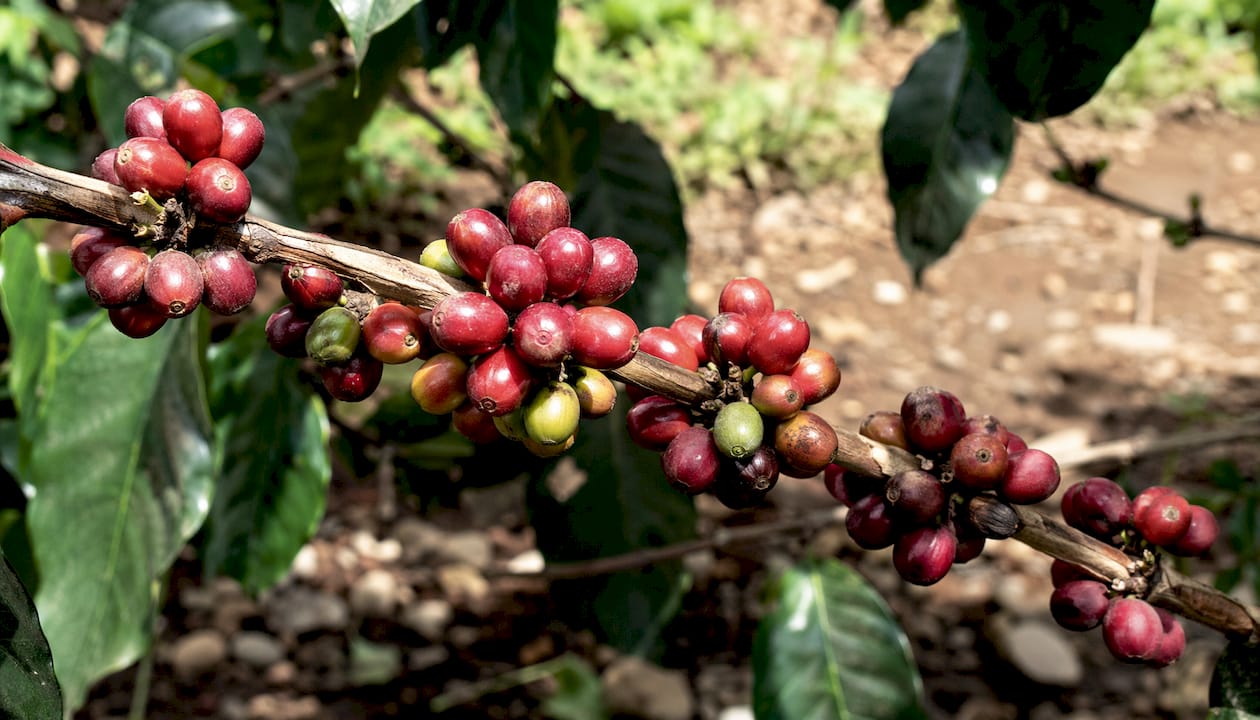
Cherry selection. Producers pick only ripe, red cherries. Unripe or damaged fruit introduces harsh, astringent flavors. Many farms float cherries in water tanks to remove defective ones before drying begins, since floating immature cherries leads to cleaner fermentation and better cup quality.
-
Spreading on raised beds or patios. Cherries are laid out in thin layers on African raised beds or concrete patios. Raised beds allow airflow underneath, which speeds even drying and reduces mold risk.
-
Turning during drying. Producers spread coffee at roughly 12 kg/m² and turn cherries every 30–45 minutes during peak sun exposure. Skipping this step causes the bottom layer to ferment unevenly, producing sour or rotten off-flavors.
-
Drying period. The cherries dry for 2–4 weeks until the bean reaches a moisture content of 10–12%. Stopping too early risks mold. Drying too long causes the bean to crack and lose volatile aromatic compounds.
-
Hulling. Once the dried husk reaches the target moisture level, a hulling machine strips away the dried fruit and parchment in one pass. The green bean emerges with its flavor compounds already locked in.
-
Resting and export. Beans rest in grain bags for several weeks before roasting. This stabilizes moisture and allows flavors to settle.
Pro Tip: When buying natural process coffee, ask the roaster for the drying duration and moisture content at export. Producers who track these numbers are serious about quality control.
The sensory outcome of this process is a cup with a syrupy, full body and fruit notes that can range from subtle berry sweetness to near-fermented wine complexity. The contact time between fruit and bean is the single biggest driver of that flavor intensity.
What flavor notes should you expect from natural processed coffee?
Natural processed coffees deliver a recognizable flavor profile, though origin shapes the specific notes significantly.
Common tasting notes across origins:
- Blueberry, strawberry, and raspberry
- Tropical fruits like mango, papaya, and passionfruit
- Dark chocolate and cocoa
- Wine-like or fermented complexity
- Honey and brown sugar sweetness
Origin-specific variations:
Ethiopian naturals, particularly from the Yirgacheffe and Sidama regions, lean toward floral and berry notes. A well-processed Ethiopian natural often tastes like blueberry compote with jasmine. Brazilian naturals, by contrast, tend toward chocolate, hazelnut, and dried fruit because Brazil’s lower-altitude farms and drier climate produce a less acidic, earthier profile.
Natural processed coffees exhibit heavier body and fruit-forward flavors compared to washed coffees, which are brighter and cleaner. Washed coffees strip the fruit away before drying, so the bean’s intrinsic acidity and terroir come through without the sweetness layer. Natural coffees trade that clarity for richness.
Roast level also shapes what you taste. Light to medium roasts preserve the volatile fruit compounds that make naturals distinctive. Dark roasting burns off those esters and replaces them with roast-driven bitterness. If you want blueberry and wine notes, you need a light roast.
| Origin | Typical flavor notes | Roast recommendation |
|---|---|---|
| Ethiopia (Yirgacheffe) | Blueberry, jasmine, berry jam | Light |
| Ethiopia (Sidama) | Strawberry, floral, citrus | Light to medium |
| Brazil (Cerrado) | Chocolate, hazelnut, dried fruit | Medium |
| Colombia (Huila) | Tropical fruit, honey, caramel | Light to medium |
The fruity tasting notes in specialty coffee are not accidental. They are the direct result of controlled fermentation during natural processing.
What are the quality challenges in natural coffee processing?
Natural processing is the highest-risk method in specialty coffee. The same fermentation that creates complex fruit flavors can also produce defects if it goes wrong.
The core risk is uncontrolled fermentation. When cherries pile up unevenly, the bottom layer ferments faster than the top. That creates a range of off-flavors, from sour and vinegary to rotten and musty. Consumer “funky” notes in natural coffee sometimes indicate defects from uncontrolled fermentation, not intentional complexity. Knowing the difference matters when you are evaluating a cup.
Signs of quality natural processing:
- Clean sweetness without harsh sourness
- Fruit notes that are distinct, not muddy or fermented-smelling
- Consistent flavor from cup to cup in the same bag
- No astringency or dryness on the finish
Signs of processing defects:
- Sharp, vinegary acidity
- Musty or barnyard aromas
- Inconsistent flavor within the same brew
- Harsh bitterness unrelated to roast level
Sorting and floating cherries before drying removes damaged or underdeveloped fruit that would otherwise introduce defects. This step separates serious producers from careless ones. A farm that skips floating is gambling with the final cup quality.
Pro Tip: If a natural coffee tastes “funky” in a way that feels unpleasant rather than complex, that is almost always a processing defect. A well-made natural should taste like fruit, not fermentation gone wrong.
The primary challenge with naturals is managing fermentation to achieve complex fruitiness rather than off-flavors. That requires skilled, attentive processing at every stage. It is also why well-made natural coffees from reputable farms cost more than commodity-grade alternatives.
How should you brew natural process coffee to get the best flavor?
Brewing method and grind size shape how much of the natural coffee’s fruit character reaches your cup.
Brewing methods that work well:
- Espresso concentrates the syrupy body and fruit sweetness, making naturals shine in milk-based drinks like lattes and flat whites. The heavier body holds up against milk without disappearing.
- Cold brew extracts the sweetness and fruit notes over time without the heat that can make fermented flavors harsh. Ethiopian naturals brewed cold produce an almost juice-like result.
- French press suits naturals because the metal filter allows the full body and oils to pass through, amplifying the richness.
- Pour-over works well with lighter, cleaner naturals. Use a slightly coarser grind to avoid over-extraction, which can amplify any fermented edge.
Brewing tips specific to natural coffees:
- Use water at 195–200°F rather than a full boil. Lower temperatures reduce the chance of extracting harsh notes.
- Grind slightly coarser than you would for a washed coffee of the same roast level. Natural coffees extract faster because the fruit compounds are more soluble.
- Taste the coffee black first. The fruit notes are most obvious without milk or sugar.
Brewing method affects specialty coffee flavor more than most coffee drinkers realize. With naturals, the method either amplifies the fruit complexity or mutes it. Espresso and cold brew amplify it. Drip machines with paper filters tend to mute it.
When buying natural coffees, look for roasters who list the processing method, origin region, and drying details on the bag. That transparency signals the roaster cares about processing’s impact on taste and has sourced accordingly.
Key Takeaways
Natural process coffee flavor is the direct result of drying whole cherries intact, which transfers fruit sugars and fermentation compounds into the bean and produces intense fruitiness, syrupy body, and wine-like complexity that no other processing method delivers.
| Point | Details |
|---|---|
| Flavor origin | Fruit sugars and esters migrate into the bean during 2–4 weeks of whole-cherry drying. |
| Signature notes | Expect blueberry, strawberry, tropical fruit, chocolate, and wine-like sweetness depending on origin. |
| Roast matters | Light to medium roasts preserve fruit compounds; dark roasts mute them significantly. |
| Quality control | Floating cherries and turning every 30–45 minutes prevents defects from uncontrolled fermentation. |
| Best brewing | Espresso, cold brew, and French press amplify natural coffee’s body and fruit character most effectively. |
Why natural process coffee rewards patience and attention
I have tasted hundreds of natural coffees over the years, and the ones that disappoint almost always share the same flaw: the producer rushed the drying stage. You can taste it immediately. The cup has a sharp, almost vinegary edge that some people mistake for complexity. It is not complexity. It is a defect.
The naturals that genuinely excite me are the ones where you can tell the producer turned those cherries obsessively, checked moisture levels daily, and sorted out every damaged cherry before the drying beds even got loaded. That discipline shows up in the cup as clean, layered fruit that builds as the coffee cools. An Ethiopian natural from a careful producer does not just taste like blueberry. It tastes like blueberry at different stages of ripeness across a single cup.
What I find most interesting is how poorly this translates to consumer expectations. Most coffee drinkers expect coffee to taste like coffee. When they encounter a well-made natural for the first time, they often think something is wrong. That reaction is actually a sign of quality. If a coffee surprises you with fruit intensity, you are probably drinking something made with real care.
My advice: start with an Ethiopian natural from a roaster who lists the farm and drying method. Brew it as espresso or cold brew. Taste it without milk first. Give it a few minutes to cool. The flavor profile will shift noticeably as the temperature drops, and that shift is one of the most interesting things you can experience in a cup of coffee.
— Sean
Moustachecoffeeclub’s natural process coffee selections
Moustachecoffeeclub curates natural process coffees from Ethiopia, Colombia, and other top origins, roasted ultra-light in the Nordic tradition to preserve every layer of fruit complexity the processing method creates.

Each bag ships roasted to order, so the volatile fruit compounds that make naturals distinctive are still at their peak when the coffee reaches you. The coffee subscription lets you work through different natural process origins over time, with detailed origin reports explaining the farm, drying method, and flavor profile for each selection. If you want to understand what natural process coffee flavor actually tastes like across different origins, a rotating subscription is the most direct way to build that knowledge.
FAQ
What is natural process coffee flavor?
Natural process coffee flavor is the intense fruitiness, sweetness, and full body that develop when whole coffee cherries are dried intact. The fruit’s sugars and fermentation compounds migrate into the bean during drying, producing notes like blueberry, strawberry, and wine.
How is natural coffee different from washed coffee?
Natural coffees dry with the fruit intact, creating heavier body and fruit-forward sweetness. Washed coffees have the fruit removed before drying, producing a cleaner, brighter, more acidic cup with less sweetness.
What are the best origins for natural process coffee?
Ethiopia produces the most celebrated naturals, with Yirgacheffe and Sidama regions known for blueberry and floral notes. Brazil is the largest producer of natural coffees, typically delivering chocolate and nutty profiles.
Why does some natural coffee taste “funky” or off?
Funky or unpleasant notes in natural coffee usually indicate defects from uncontrolled fermentation during drying. Well-made naturals taste like clean, distinct fruit. Harsh sourness or musty aromas signal poor processing, not intentional complexity.
What roast level is best for natural process coffee?
Light to medium roasts best preserve the fruit compounds that define natural coffee flavor. Dark roasting burns off the esters responsible for berry and tropical fruit notes, replacing them with roast-driven bitterness.
Recommended
- How Coffee Processing Affects Taste: A Flavor Guide | Blog | The Moustache Coffee Club
- Why Coffee Has Fruity Tasting Notes Explained | Blog | The Moustache Coffee Club
- Why Coffee Origin Impacts Flavor Complexity | Blog | The Moustache Coffee Club
- How to buy specialty coffee: expert tips for flavor and quality | Blog | The Moustache Coffee Club


